
Wool and sweaters snag more because their fibers are soft, elastic, and often loosely structured, making it easy for yarns to catch, stretch, and pull out of place. Comfort and warmth come with a higher risk of surface damage.
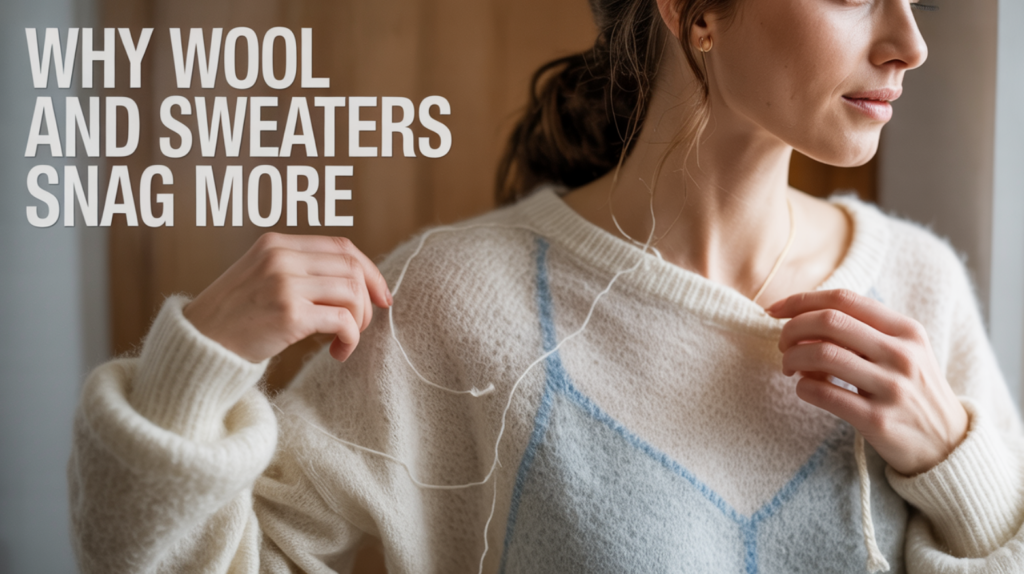
This article explains why wool behaves this way, how sweaters amplify the problem, and how wool compares to other common fabrics.
1. Wool Fibers Are Naturally Springy and Soft
Wool fibers have a crimped, elastic structure. This gives wool its warmth and resilience, but also makes it prone to snagging.
Because wool fibers:
- Bend easily
- Stretch under tension
- Don’t snap back cleanly
A caught fiber is more likely to pull outward instead of breaking. Once pulled, the snag often stays visible.
This softness is a major contrast to firmer materials like cotton, where fibers grip each other more tightly.
2. Sweaters Are Usually Knit – Not Woven
Most sweaters are knit fabrics, which immediately increases snag risk.
Knitted construction means:
- Loops sit on the fabric surface
- Yarns are exposed
- One pulled loop can distort a large area
This explains the overlap between wool issues and why knit fabrics snag so easily, wool sweaters combine soft fibers + looped construction, which is one of the worst combinations for snag resistance.
3. Loose and Chunky Sweaters Snag the Most
The looser the knit, the higher the snag risk.
High-risk wool garments include:
- Chunky cable-knit sweaters
- Hand-knit or artisanal knits
- Oversized or relaxed-fit sweaters
These designs create larger loops and more surface texture, which catch easily on furniture, bags, and jewelry.
By comparison, tightly constructed fabrics like denim rarely snag and tend to tear or wear instead.
4. Friction Areas Make Wool Worse Over Time
Wool reacts poorly to repeated friction.
Common snag zones include:
- Elbows
- Underarms
- Chest (bag straps)
- Waist (belts and waistbands)
Friction loosens fibers, making future snags more likely. Over time, this also leads to fuzzing and surface distortion, often mistaken for simple wear.
This long-term damage pattern differs from smoother synthetics like polyester, which may resist friction better depending on construction.
5. Wool Blends Can Increase Snagging
Many modern sweaters use blended fibers.
When wool is blended with:
- Acrylic
- Nylon
- Elastane
The fibers stretch and recover at different rates. This imbalance increases the chance of uneven pulls and visible snags, which aligns with why blended fabrics are often more prone to snagging.
6. Fine Wool vs Coarse Wool
Not all wool behaves the same.
- Fine wool (merino, cashmere):
Softer, smoother, but snags more easily - Coarse wool:
Stiffer, rougher, slightly more resistant, but still vulnerable due to knit structure
Even high-quality wool isn’t immune; in fact, luxury softness often increases snag risk.
7. Wool Compared to Delicate Fabrics
While wool snags easily, it’s still more durable than ultra-delicate materials.
For example:
- Wool snags less instantly than chiffon and silk
- But far more easily than woven cotton or firm synthetics
This places wool high on the snag-risk spectrum, but not at the very top.
Final Takeaway
Wool and sweaters snag more because soft fibers, elasticity, and knit construction work against surface durability. The same qualities that make wool warm and comfortable also make it vulnerable to catching and pulling.
Tighter knits, reduced friction, and careful handling can slow the damage, but wool will always require more care than woven, rigid fabrics.