Chiffon and silk snag instantly because they use ultra-fine fibers, extremely smooth surfaces, and loose constructions that offer almost no resistance to pulling. Even light contact can disturb the fabric surface permanently.
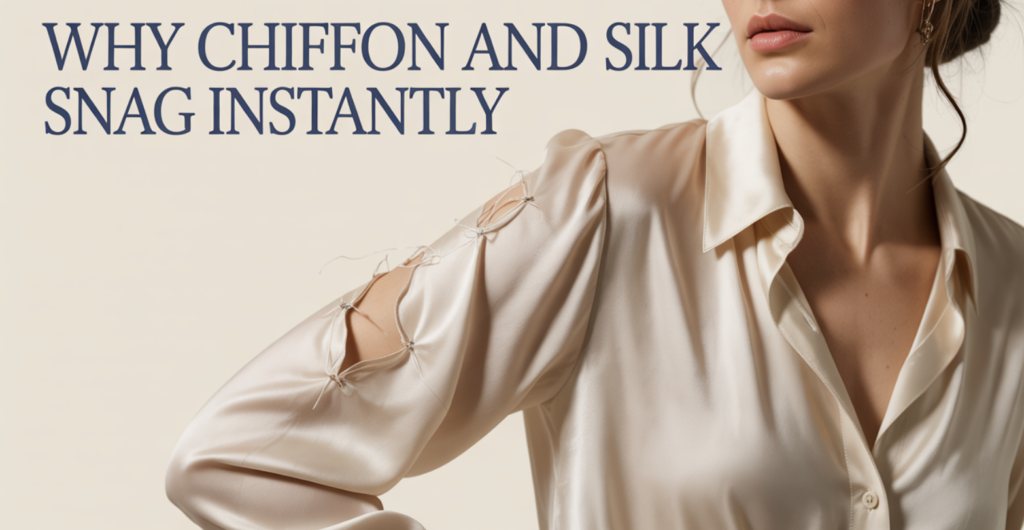
This article explains why these fabrics are so fragile, how chiffon differs from silk, and how they compare to other snag-prone materials.
1. Ultra-Fine Fibers Offer No Surface Grip
Silk fibers are exceptionally fine and smooth, while chiffon (often silk or polyester-based) uses very thin, lightweight yarns.
Because of this:
- Fibers don’t grip each other
- Threads slide easily when caught
- Pulled yarns don’t settle back into place
This is the opposite of sturdier fabrics like cotton, where fiber friction helps prevent immediate damage.
2. Chiffon Uses an Open, Loose Structure
Chiffon is intentionally woven to be:
- Sheer
- Airy
- Lightweight
That openness creates gaps between yarns, making it easy for:
- Fingernails
- Jewelry
- Zippers
- Rough skin
To catch a thread. Once pulled, the snag usually travels across the fabric surface.
This vulnerability resembles what happens in loose knit fabrics, even though chiffon is woven rather than knitted.
3. Silk’s Smoothness Makes Snags Slide Further
Silk’s smooth surface doesn’t stop a snag, it lets it travel.
When silk snags:
- The pulled fiber slides easily
- The snag spreads instead of staying localized
- The damage becomes highly visible
This is why silk snags often look worse than those in wool sweaters, even though wool snags more frequently overall.
4. Lightweight Means Low Resistance
Both chiffon and silk prioritize drape and elegance over durability.
Their limitations include:
- Minimal yarn thickness
- Low tension holding fibers in place
- No structural buffer against sharp contact
Compared to tougher fabrics like polyester, which can be engineered for strength, silk and chiffon have no built-in resistance.
5. Stretch and Blends Increase the Risk
When chiffon or silk is blended or stretched, snagging becomes even worse.
Blends may include:
- Polyester (adds strength but uneven behavior)
- Elastane (adds tension and instability)
6. Chiffon and Silk vs Other Fabrics
On the snag-risk scale:
- They snag faster than wool and sweaters
- Far more easily than cotton or denim
- Even light friction can cause permanent damage
In contrast, denim usually tears or abrades rather than forming classic snags.
7. Why Repairs Rarely Work Well
Because fibers are so fine:
- Pulled threads don’t hide easily
- Fabric distortion remains visible
- Repairs can worsen the damage
This makes prevention far more important than repair for these fabrics.
Final Takeaway
Chiffon and silk snag instantly because fine fibers, open structures, and smooth surfaces leave no margin for error. These fabrics are designed for beauty and flow, not durability.
If snag resistance matters, they sit at the very top of the risk spectrum and require the most careful handling of any everyday fabric.