
Laundry bags are one of the most effective tools for preventing fabric snagging, when the right type is used correctly. They don’t just separate clothes; they reduce friction, stretching, and direct contact with snag-causing surfaces.
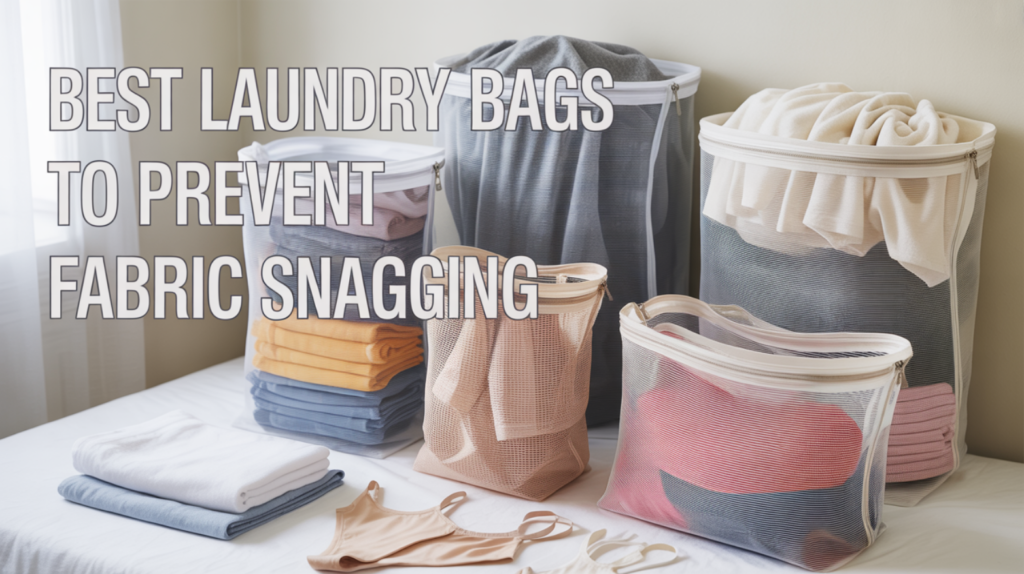
However, not all laundry bags offer the same level of protection.
How Laundry Bags Prevent Snags
Laundry bags work by creating a physical barrier between delicate fabrics and damaging forces inside the washer.
They help by:
- Preventing contact with zippers, hooks, and seams
- Limiting fabric stretching during agitation
- Reducing friction between garments
- Containing loose fibers before they pull out
This protection is especially important when washing delicate fabrics, as explained in Should You Wash Delicate Fabrics Separately?.
Best Laundry Bag Materials
The material of the bag matters more than most people realize.
Fine Mesh Bags
Best for:
- Chiffon, silk, lace
- Sheer fabrics
- Lightweight knits
Fine mesh allows water flow while preventing yarn loops from pushing through the holes.
Medium Mesh Bags
Best for:
- Knit sweaters
- Activewear
- Synthetic blends
They balance cleaning efficiency with fiber protection.
Avoid coarse mesh bags, large holes allow fabric loops to protrude and snag internally.
Zipper Design Matters
Poor zipper design is a hidden snag risk.
Choose bags with:
- Covered or fabric-wrapped zippers
- Zipper garages that prevent metal exposure
- Smooth seams inside the bag
Exposed metal edges can cause internal snagging, defeating the purpose of the bag.
Bag Size and Fit
Overstuffing laundry bags increases snag risk.
A properly filled bag:
- Allows light movement
- Prevents fabric bunching
- Reduces fiber tension
If the fabric is compressed, fibers stretch and pull, the same issue seen with washer overloading.
Should You Still Separate Clothes?
Yes. Laundry bags don’t replace sorting.
For best results:
- Wash delicates together
- Place each delicate item in its own bag when possible
- Avoid mixing heavy garments in the same load
This combined approach minimizes both friction and mechanical stress.
Can Laundry Bags Protect Clothes in the Dryer?
Laundry bags offer limited protection in dryers.
In dryers:
- Bags twist tightly
- Heat builds up
- Fabric movement becomes uneven
For snag-prone items, it’s safer to remove clothes from bags after washing and air dry instead.
Do Laundry Bags Replace Fabric Softener?
Laundry bags and fabric softener solve different problems.
- Laundry bags reduce mechanical damage
- Fabric softeners reduce static
Softener alone doesn’t prevent snags, which we’ll explain clearly in Does Fabric Softener Help Prevent Snags?.
When Laundry Bags Work Best
Laundry bags are most effective when:
- Used on gentle cycles
- Paired with proper sorting
- Not overfilled
- Combined with air drying
They’re a prevention tool, not a repair solution.
Final Takeaway
The best laundry bags for preventing fabric snagging are fine-mesh, well-constructed, properly sized bags used alongside gentle washing habits.
Used correctly, they significantly extend the life of delicate clothing.