
Delicate fabrics should be washed only when truly necessary. Overwashing is one of the most overlooked causes of fabric snagging, fiber weakening, and premature wear.
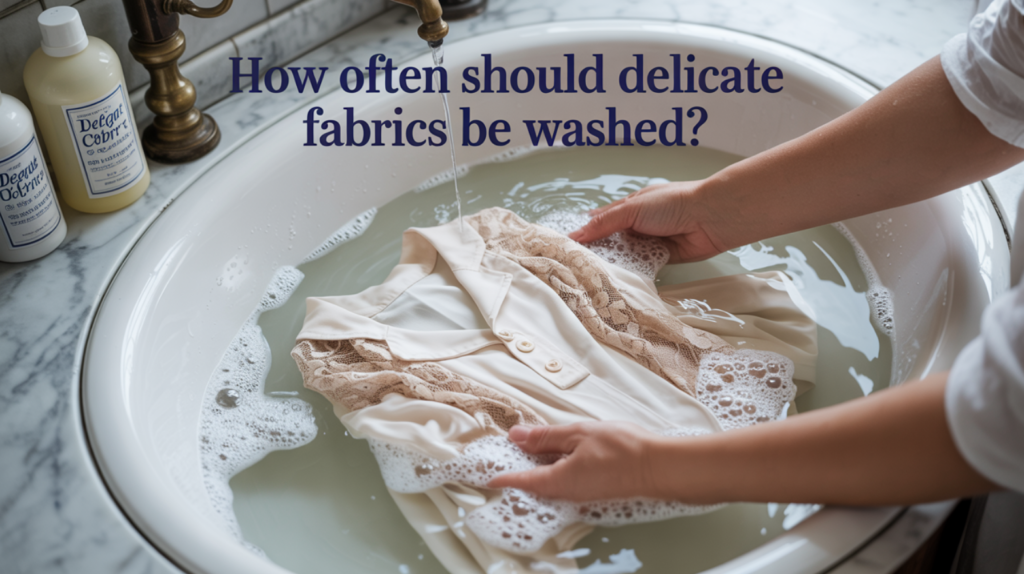
Every wash stresses fabric structure, even when done correctly.
Why Overwashing Leads to Snags
Each wash cycle applies:
- Mechanical agitation
- Fiber stretching
- Friction between yarns
- Spin-cycle tension
Over time, this repeated stress loosens yarn loops, making them easier to pull out. That’s why fabrics often snag suddenly, the damage has been building quietly.
This cumulative effect starts with washing habits, as explained in How Washing Clothes Incorrectly Causes Snags.
Recommended Washing Frequency by Fabric Type
General guidelines for delicate fabrics:
- Silk, chiffon, lace: Every 3–4 wears
- Knit sweaters: Every 4–6 wears
- Activewear: After 1–2 light uses (depending on sweat)
- Light synthetic blends: Every 2–3 wears
Spot cleaning between washes helps extend time between full cycles.
The Illusion of “Clean Enough”
Many garments don’t need washing after every wear.
Light use often leaves:
- No visible dirt
- Minimal odor
- No sweat buildup
Washing anyway causes unnecessary fiber stress, increasing snag risk without improving cleanliness.
Washing Less Doesn’t Mean Washing Carelessly
When washing is necessary, protection still matters.
Best practices include:
- Separating delicate fabrics
- Using gentle cycles
- Placing items in laundry bags
- Avoiding heavy loads
These steps work together to reduce snagging.
Does Fabric Softener Allow More Frequent Washing?
No. Fabric softener doesn’t strengthen fibers or reverse damage.
Even with softener, frequent washing still:
- Weakens yarn structure
- Reduces elasticity
- Increases surface loops
This misconception is addressed fully in Does Fabric Softener Help Prevent Snags?.
Drying Frequency Matters Too
Drying after every wash compounds the problem.
Dryers:
- Apply heat stress
- Increase fiber brittleness
- Set existing snags permanently
Reducing dryer use significantly lowers snag risk.
Signs You’re Washing Too Often
Your clothes may be overwashing if you notice:
- Snags appearing suddenly
- Fabric thinning
- Loss of elasticity
- Roughened surfaces
These signs usually appear before visible wear.
Final Guidance
Delicate fabrics last longest when washing is intentional, not routine. Washing less, but washing correctly, protects fiber structure and reduces snag formation more than any product or additive.