
Fabric snagging can be frustrating, especially when it appears soon after purchasing a garment. This often leads to the question: is fabric snagging a manufacturing defect, or just normal wear and tear?
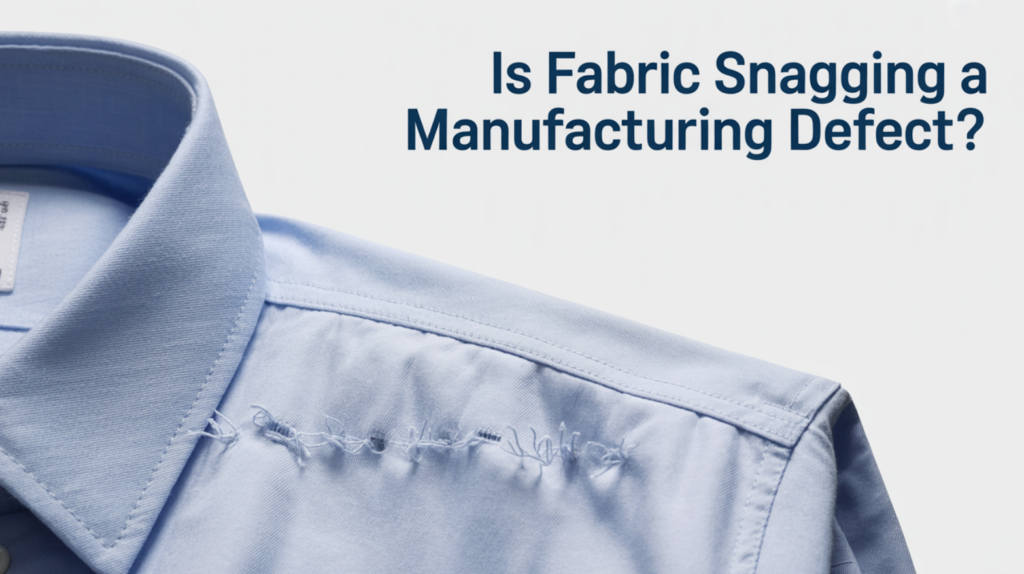
The answer depends on when, how, and why the snag occurs.
What Counts as Normal Fabric Behavior
Most fabrics, especially delicate or flexible ones, are designed for comfort and appearance, not complete snag resistance. In many cases, snagging is considered normal surface wear, particularly when it develops gradually through use.
Snagging that appears after repeated friction or contact usually reflects how the fabric behaves in real life, not how it was made.
When Snagging May Indicate a Defect
Fabric snagging may be considered a manufacturing defect when:
- Snags appear immediately or after minimal wear
- Multiple snags form without obvious contact or friction
- Threads pull excessively loose with very light use
- The same issue appears across identical garments
In these cases, the problem may stem from poor yarn tension, loose weaving, or inadequate finishing, rather than user activity.
Fabric Type Still Matters
Some fabrics are naturally more prone to snagging, even when well-made. For example:
- Fine knits
- Silk and chiffon
- Smooth synthetic filaments
These materials can snag easily despite good manufacturing standards. This is why snagging alone does not automatically signal poor quality. Understanding the basic mechanics of snagging helps clarify this distinction, as explained in what is fabric snagging?.
Snagging vs Other Surface Issues
It’s also important to separate snagging from other fabric problems. For instance:
- Pilling involves fiber balls, not pulled threads
- Tears involve broken fabric structure
- Abrasion involves thinning, not looping
Confusing these issues can lead to incorrect assumptions about defects.
Why Some Clothes Get Blamed Unfairly
Clothes often snag in predictable areas due to design and use, such as:
- Elbows
- Waistlines
- Underarms
- Areas that rub against bags or furniture
When this happens, it’s usually related to usage patterns and fabric choice, not manufacturing faults.
What Retailers Usually Consider a Defect
Most retailers view snagging as a defect only if:
- It appears before normal use
- It affects multiple garments from the same batch
- It results from faulty construction rather than wear
Snagging that develops over time is typically classified as wear-related, even if the garment is expensive.
The Practical Answer
Fabric snagging is sometimes a manufacturing defect, but more often it is a natural result of fabric structure and daily use. The key factors are:
- Speed of damage
- Severity
- Consistency across garments
- Fabric type and construction
Understanding these factors helps you decide whether to request a return, attempt repair, or simply adjust care habits.