
Fabric damage rarely happens in just one way. Some materials develop pulled threads, while others form tiny fiber balls across the surface. These two problems look similar from a distance, yet they come from very different behaviors inside the fabric.
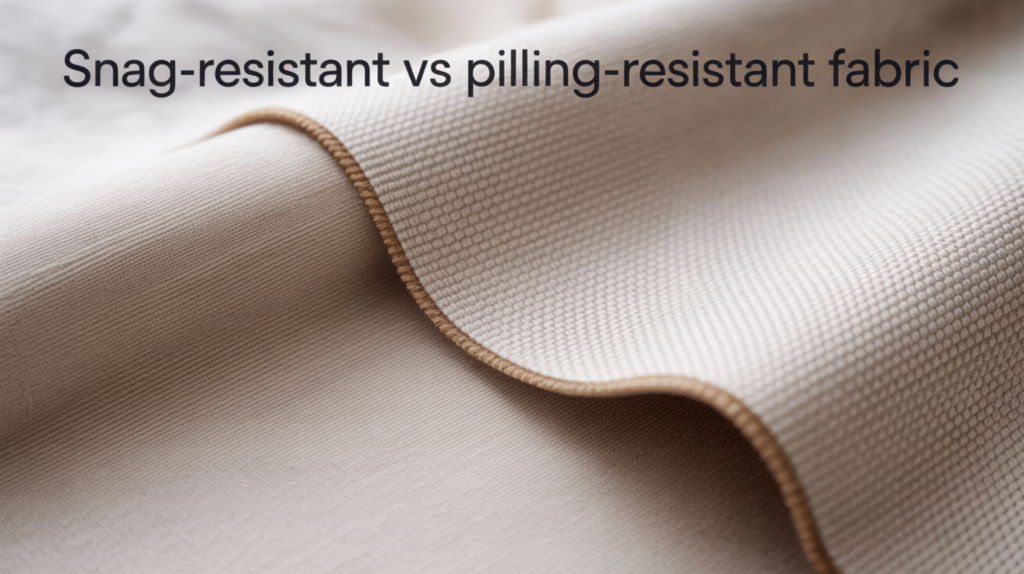
Understanding the difference between snag resistance and pilling resistance helps prevent frustration, wasted money, and garments that age too quickly.
Two Problems, Two Different Causes
Snagging begins when part of a thread is lifted or pulled out of position by friction or contact. Pilling, on the other hand, occurs when loose fibers twist together into small balls after repeated rubbing. Both damage appearance, but they originate from completely different mechanisms.
Because of this difference, a fabric that resists one type of damage may perform poorly against the other.
How Snag Resistance Protects the Surface
In snag-resistant fabrics, the surface threads remain tightly controlled. Each fiber stays supported by its neighbors, limiting how much movement occurs when the fabric brushes against rough edges, jewelry, furniture, or equipment. This stable surface prevents the sudden formation of loops and pulls that disrupt the look of clothing and upholstery.
The calmer the surface structure, the longer the fabric maintains its original appearance during daily use.
How Pilling Resistance Works Instead
Pilling resistance focuses on fiber shedding and entanglement. When fibers break loose from the yarn and rub against one another, they twist together into small clusters. Fabrics with strong pilling resistance either release those fibers before they accumulate or prevent them from breaking free in the first place.
This is why garments may remain smooth but still develop pills, or resist pills while still forming visible snags.
Why Confusion Happens So Often
Many shoppers assume all “durable” fabrics behave the same way. In reality, durability is multi-dimensional. A jacket might survive years of wear without tearing, yet still show dozens of pulled threads because it lacks surface stability. Meanwhile, another garment might remain visually smooth but slowly cover itself in pills from constant motion.
The difference becomes especially clear when examining which materials are most vulnerable to snagging, since many of those same fabrics can show strong pilling resistance at the same time.
Choosing the Right Protection for Your Needs
Daily wear exposes fabrics to friction, movement, and contact from unpredictable sources. In homes, furniture fabrics encounter pet claws, textured clothing, and frequent handling. In clothing, sleeves and hems face constant brushing and rubbing.
When people experience these problems, they often notice that some fabrics stay calm while others degrade rapidly. That experience directly reflects whether the material was designed to resist surface pulling or fiber buildup. This distinction becomes clearer when learning what snag resistance actually means in real fabrics.
Emotional Reality of Fabric Performance
There is a subtle comfort in wearing clothing that holds itself together. It allows people to move freely, work confidently, and sit without constant concern for visible damage. That quiet reliability becomes part of the fabric’s value, even though it rarely appears on labels or price tags.
The contrast becomes even sharper when fabrics are evaluated against slow, long-term wear, which is why comparing this topic with how abrasion resistance differs from snag resistance reveals how these durability properties protect against entirely different threats.
Final Perspective
Snag resistance and pilling resistance protect against two different forms of wear. One shields the fabric’s threads from being pulled out of place. The other prevents loose fibers from forming clusters on the surface. Knowing the difference allows people to choose materials that age gracefully under the specific demands of real life.