
Yes, washing machines can cause fabric snagging, but usually by accelerating damage that already exists. Snagging occurs when movement, friction, and contact inside the wash drum pull weakened fibers out of place, especially in delicate or loosely constructed fabrics.
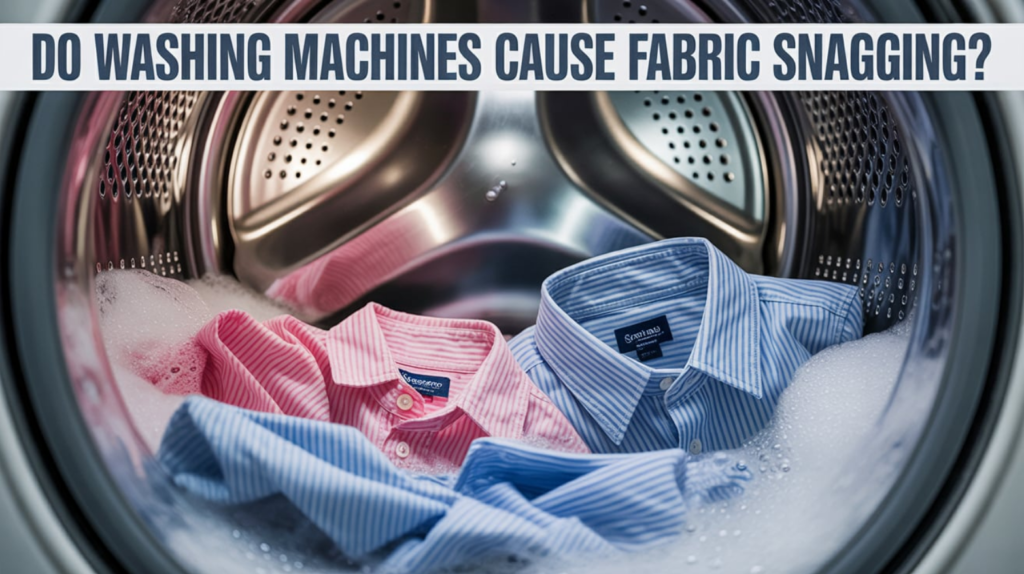
In most cases, washing machines reveal fabric weaknesses that began during everyday use.
Drum Movement and Fabric Friction
Inside a washing machine, clothes constantly rub against the drum and against each other. This repeated friction loosens surface fibers, making garments more vulnerable than they already are from daily wear-related snagging.
Lightweight knits and synthetics are particularly affected because their yarn loops sit closer to the surface.
Zippers, Hooks, and Mixed Loads
One of the most common causes of washing-related snags is washing incompatible items together. Zippers, bra hooks, buttons, and Velcro act like tiny pulling tools when they catch on soft fabric.
Overloading the Washing Machine
When a machine is overfilled, clothes cannot move freely. Instead, they twist tightly together, increasing tension on wet fibers, which are weaker than dry ones.
This concentrated stress mimics what happens when fabrics rub against rough or abrasive surfaces, except the pressure lasts for the entire wash cycle.
Spin Cycles and Fiber Stress
High-speed spin cycles stretch fabric aggressively, especially at seams and edges. While this may not cause immediate snags, it weakens the structure and increases the likelihood of snagging later during normal wear.
This delayed damage explains why some garments appear fine after washing but begin snagging shortly afterward.
Fabric Quality Makes a Difference
Fabric construction matters more than the washing machine itself. Lower-quality fibers tend to break and lift faster during repeated wash cycles, which is why cheap fabrics often snag more easily even when washed carefully.
Tightly woven fabrics usually survive machine washing far better than loose knits or blends.
Static Electricity After Washing
Washing and drying can increase static electricity, especially in synthetic fabrics and low-humidity environments. Static causes fibers to stand upright, making them easier to catch on objects once worn again.
Why Washing Often Gets Blamed
Washing machines are often blamed because they:
- Expose weak fibers
- Pull existing loops outward
- Make hidden damage visible
In reality, most snags begin before washing and are simply completed during the wash cycle.