
Yes, cheap fabrics usually snag more easily because they are made with lower-quality fibers, looser construction, and less durable finishing. While price alone doesn’t guarantee performance, lower-cost fabrics are more likely to develop loose fibers that catch and pull.
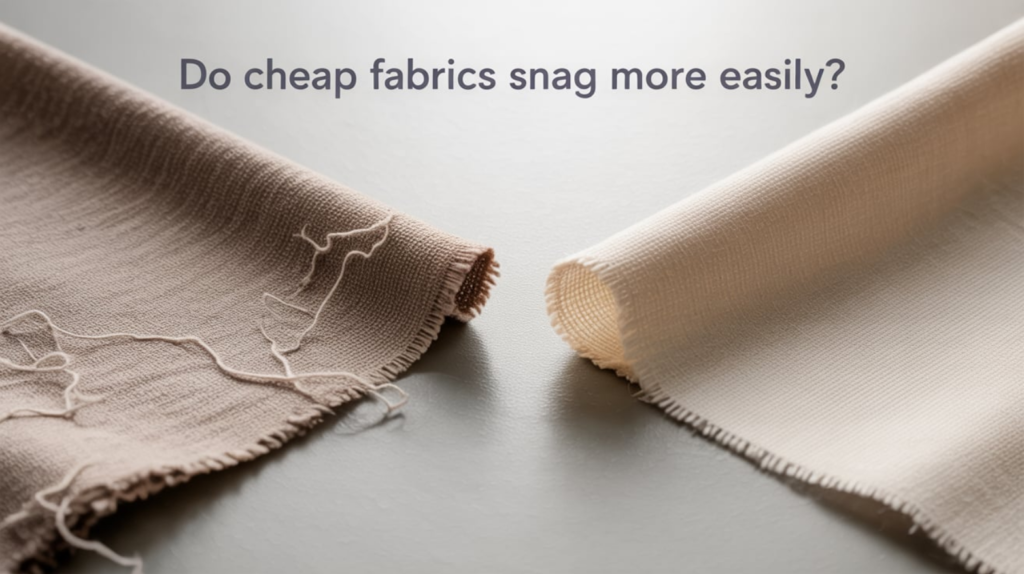
In most cases, fabric quality matters more than how carefully you treat the garment.
Why Fabric Quality Affects Snagging
Fabric quality depends on:
- Fiber length and strength
- Yarn twist consistency
- Weave or knit tightness
- Finishing processes
Lower-quality fabrics often have shorter fibers and uneven yarns, which create weak points. These weaknesses first appear during normal daily wear, where friction and movement slowly lift fibers to the surface.
Looser Construction Means More Exposed Loops
Cheaper garments frequently use looser weaves or knits to reduce production costs. This leaves more yarn loops exposed, making them easier to catch on:
- Furniture edges
- Seat belts
- Bags and belts
This behavior mirrors what happens when rough surfaces repeatedly contact fabric, except the fabric is less able to recover.
Washing Exposes Weak Fibers Faster
Repeated washing accelerates fiber breakdown in lower-quality fabrics. The combination of water weight, tumbling, and spinning loosens already weak yarns, which is why people often notice snags after laundering.
This effect explains why washing machines appear to cause snagging, when they’re actually revealing poor fiber durability.
Accessories Pull Cheap Fabrics More Easily
Jewelry, belts, and bags are more likely to snag cheap fabrics because weak fibers separate with less force. Even smooth accessories can catch uneven yarn ends.
This makes lower-quality clothing especially vulnerable to snagging from everyday accessories.
Static Electricity Magnifies the Problem
Cheap synthetic fabrics are more prone to static buildup. Static causes fibers to lift and spread apart, making them easier to catch on surrounding objects.
If static seems to worsen snagging in certain clothes, it’s likely tied to how static electricity increases snagging risk.
Are Expensive Fabrics Snag-Proof?
Even high-quality fabrics can snag under the right conditions. However, they typically:
- Have stronger fibers
- Use tighter construction
- Recover better from stress
This means snags occur less frequently and spread more slowly compared to cheaper alternatives.
Why Cheap Fabric Snagging Feels Inevitable
Lower-cost garments tend to accumulate small weaknesses quickly. Once fibers are loosened, snags can appear from minimal contact, making damage feel sudden and unavoidable.
Understanding this helps set realistic expectations and explains why careful handling doesn’t always prevent snagging.