
Fabric snags often look worse than they actually are. In many cases, a snagged thread has not broken, it has simply been pulled out of position. Whether the damage is permanent or repairable depends on how the snag formed, the fabric structure, and how quickly it’s handled.
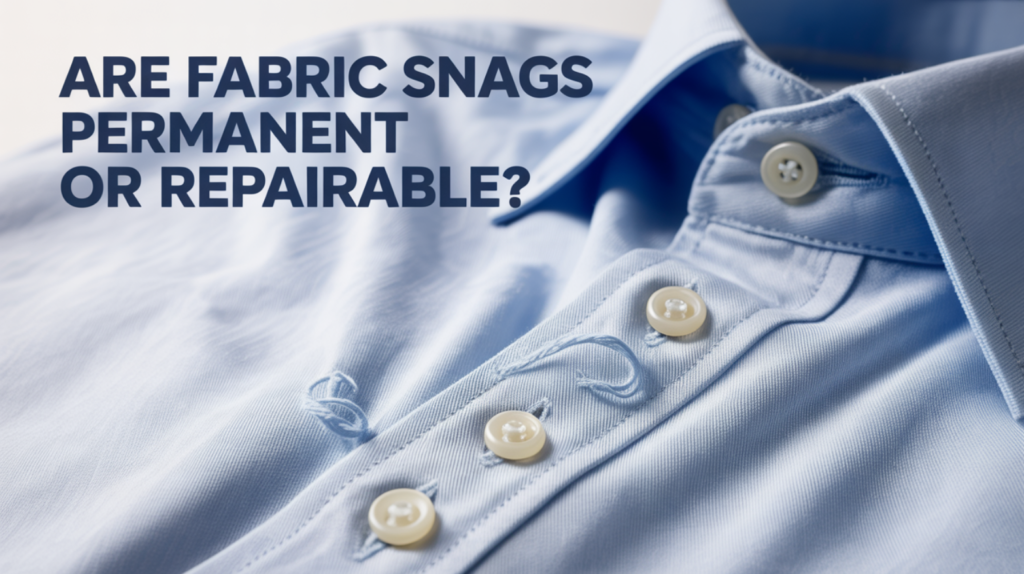
When Fabric Snags Are Repairable
A fabric snag is usually repairable when:
- The thread is still intact
- The loop is small or moderate
- The fabric weave has not torn
In these cases, the displaced thread can often be guided back into the fabric, restoring much of the original appearance. This is more likely when the snag developed gradually, as explained in how fabric snags form over time.
Knits and woven fabrics behave differently here. Knits tend to allow threads to move back more easily, while tightly woven fabrics may hold the displacement more firmly.
When Fabric Snags Become Permanent
Snags are more likely to be permanent when:
- The thread has snapped
- The loop has been pulled repeatedly
- The surrounding fabric structure has weakened
At this stage, the snag may no longer sit flat even after repair attempts. This does not necessarily mean the fabric is defective, it often reflects accumulated surface stress, not sudden failure.
Fabric Type Makes a Big Difference
Some fabrics recover better than others:
- More repairable:
Knits, wool blends, medium-weight cotton - Less repairable:
Silk, chiffon, fine synthetics, very loose weaves
This explains why some clothes appear to “heal” after a snag while others retain visible damage, a pattern explored further in why some clothes snag more than others.
Snags vs Other Surface Damage
It’s important not to confuse snagging with other forms of fabric wear. For example:
- Snags involve pulled threads
- Pilling involves fiber balls
- Tears involve structural breaks
Treating a snag like pilling, by shaving or cutting, can permanently damage the fabric.
Timing Matters More Than People Realize
The sooner a snag is addressed, the higher the chance of repair. Fresh snags:
- Have less tension distortion
- Haven’t been re-caught repeatedly
- Are easier to blend back into the fabric
Snags that are ignored often worsen simply through normal movement and washing.
When Repair Isn’t Worth Attempting
In some situations, repair attempts may:
- Weaken surrounding threads
- Make the snag more visible
- Create uneven fabric texture
If the snag is large, broken, or located in a high-friction area, it may be better to leave it alone or accept it as cosmetic wear rather than risk further damage.
The Practical Answer
Fabric snags are sometimes permanent, sometimes repairable, and the difference is usually clear once you understand:
- How the snag formed
- What fabric you’re dealing with
- How much stress the area has endured
Knowing this helps you make better decisions about care, repair, and prevention.