
Clothing moves through the world with us. It brushes past desks, car doors, handbags, railings, chairs, and countless unseen edges every day. Some garments quietly absorb this contact and remain smooth, while others seem to record every interaction.
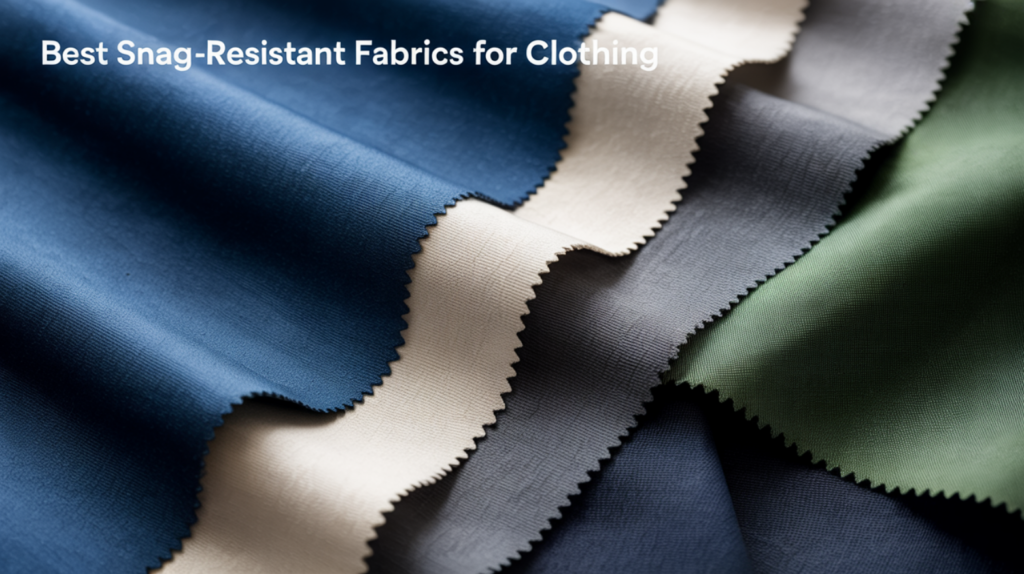
The difference almost always lies in the fabric’s relationship with snagging.
Why Some Clothes Age Gracefully
Snag-resistant fabrics protect the surface threads that give clothing its clean look. When those threads remain anchored, the garment keeps its shape and finish even after long hours of wear. When they loosen, the fabric begins to look tired, regardless of how new it actually is.
This is why two shirts made for the same purpose can feel completely different after a few weeks of use.
Fabrics That Handle Daily Wear Best
Certain fabrics consistently perform better in real life because of how their fibers cooperate at the surface.
Tightly woven synthetic blends often offer excellent protection, as their compact structures limit how easily threads are pulled from place. Smooth microfibers behave similarly, creating a surface that resists catching even when exposed to constant movement.
Modern performance knits also provide strong resistance when engineered correctly. Their controlled elasticity allows movement without exposing individual yarns, making them well-suited for active environments.
When Natural Fibers Work Well
Not all natural fabrics struggle with snagging. High-quality cotton with tight weaves can remain remarkably stable, especially when combined with reinforcing fibers. Wool garments constructed with dense, compact yarns also hold up well, though looser versions tend to show wear much sooner.
This difference becomes especially noticeable when comparing garments made from materials that are naturally vulnerable to snags, where even small changes in construction can dramatically affect long-term appearance.
How Clothing Choice Affects Daily Confidence
People often underestimate how much fabric performance influences comfort and confidence. Wearing a sweater that resists visible damage allows movement without hesitation. The mind relaxes when the body is no longer guarding against every brush or contact.
That emotional ease becomes part of the garment’s value, even though it never appears on the label.
How Fabric Design Supports Long-Term Wear
Designers who prioritize snag resistance focus on surface integrity first. By controlling fiber movement, they allow the fabric to flex, stretch, and recover without creating visual chaos. This is the same principle that explains how snag resistance functions at the fiber level, where structure quietly determines behavior.
Long-term care also influences how clothing behaves over time, which is why learning how to improve fabric snag resistance helps garments retain their clean finish far longer.
Final Thought
The best snag-resistant fabrics for clothing are not defined by thickness or weight, but by how calmly their threads work together. When fibers cooperate, garments remain composed. When they don’t, the fabric tells every story of its journey. Choosing wisely gives your clothes the chance to age with quiet strength.