
Yes, dryers can absolutely make fabric snagging worse, especially for delicate, knit, or loosely woven materials. In many cases, the dryer doesn’t create the first snag, it magnifies existing fiber damage caused during washing.
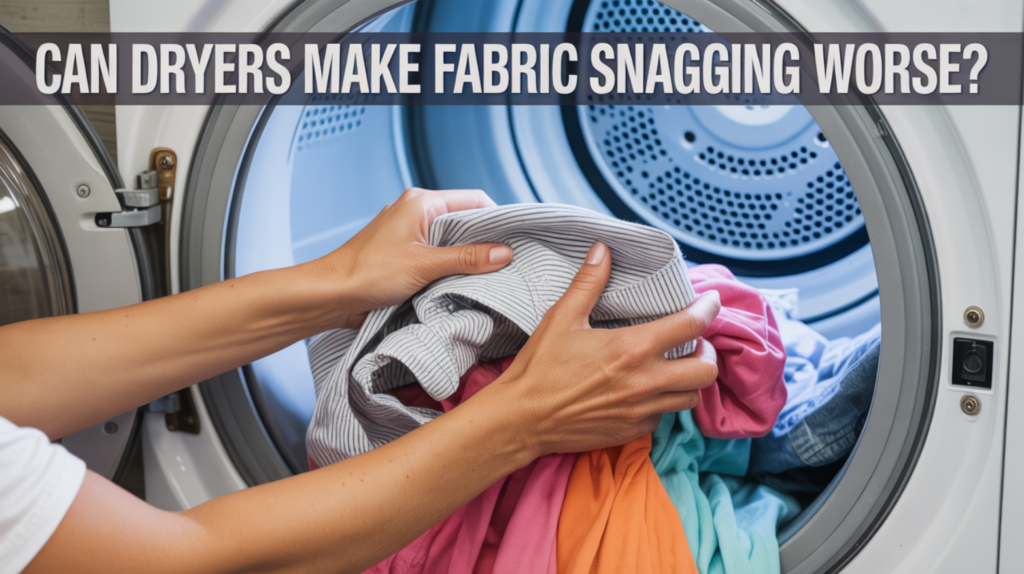
Understanding how dryers stress fabrics helps prevent snags before they become permanent.
Why Dryers Are Hard on Fabrics
Dryers rely on heat, tumbling, and airflow. While effective for drying, this combination is harsh on weakened fibers.
Inside a dryer, clothes:
- Tumble repeatedly against the drum
- Rub against other garments
- Stretch when hot and contract when cooling
- Catch on seams, zippers, and fasteners
If fibers were already loosened during washing, dryers pull them out further.
Heat Weakens Fibers
Heat softens fibers, especially:
- Synthetic blends
- Elastane and stretch fabrics
- Fine knits and silks
When fibers are warm, they stretch more easily. Tumbling while warm allows yarn loops to pull out and set in place as the fabric cools.
Overdrying Makes Snags Permanent
Leaving clothes in the dryer too long increases damage:
- Fibers dry out and lose elasticity
- Pulled loops become fixed
- Fabric surfaces become rougher
Once a snag sets during drying, it becomes harder to repair without professional tools.
Dryers and Delicate Fabrics
Delicates are especially vulnerable because they already have:
- Fine yarns
- Looser weaves
- Lower resistance to friction
Can Laundry Bags Protect Clothes in the Dryer?
Laundry bags help during washing, but they’re less effective in dryers.
In dryers:
- Bags twist tightly
- Heat builds inside
- Fabric movement becomes restricted
For best results, laundry bags should be paired with air drying or flat drying, especially for snag-prone garments. We’ll look at proper bag use in Best Laundry Bags to Prevent Fabric Snagging.
Does Fabric Softener Prevent Dryer Snags?
Fabric softener does not protect fabrics from heat or tumbling.
While softeners reduce static, they do not stop fiber stretching or mechanical pulling.
Air Drying vs Machine Drying
Air drying significantly reduces snag risk because:
- No tumbling stress
- No heat damage
- Minimal fiber movement
Flat drying is ideal for knits, while hanging works for woven fabrics that don’t stretch.
Drying Frequency Matters Too
Even gentle drying, when done frequently, weakens fibers over time.
Limiting drying cycles helps preserve fabric strength, a topic closely tied to How Often Should Delicate Fabrics Be Washed?.
Final Verdict
Dryers don’t always cause the first snag, but they turn small fiber damage into visible fabric flaws. Heat, tumbling, and overdrying are the main contributors.
For snag-prone clothing, air drying is the safest choice.