
Polyester is generally resistant to snagging, but its behavior depends heavily on how the fabric is constructed. While the fiber itself is strong and smooth, certain polyester fabrics can still snag easily under the right conditions.
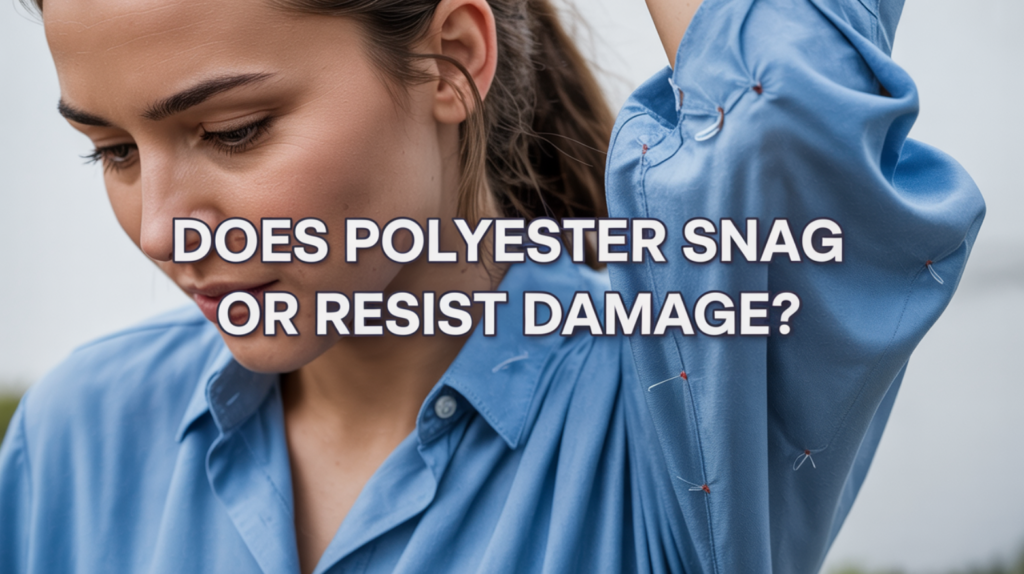
This article explains why polyester often resists damage, when it snags anyway, and how it compares to other common fabrics.
1. Polyester Fibers Are Strong and Smooth
Polyester is a synthetic fiber engineered for durability.
Key properties include:
- High tensile strength
- Smooth, slippery surface
- Low moisture absorption
Because polyester fibers slide rather than grip, they are less likely to catch and pull when brushed against rough surfaces. This gives polyester an advantage over softer natural fibers like cotton and especially wool.
2. Construction Matters More Than the Fiber
Polyester’s snag resistance depends more on fabric structure than on the fiber itself.
More snag-resistant polyester
- Tightly woven polyester
- Microfiber polyester
- Smooth athletic knits with dense construction
More snag-prone polyester
- Loose polyester knits
- Textured or brushed polyester
- Open-mesh polyester fabrics
Loose constructions behave similarly to knit fabrics, even though the fiber is stronger.
3. Polyester Often Pills Before It Snags
Instead of forming classic snags, polyester often develops pilling.
This happens because:
- Fibers don’t break easily
- Loose ends ball up on the surface
So while polyester may resist snagging initially, surface damage still appears over time. This is a different failure pattern compared to fabrics like denim, which tends to tear or abrade instead.
4. Stretch Polyester Is More Vulnerable
When polyester is blended with elastane or spandex, snag risk increases.
Stretch introduces:
- Higher yarn tension
- Loop expansion in knits
- Uneven fiber recovery
5. Polyester vs Delicate Fabrics
Compared to delicate fabrics:
- Polyester is far more resistant than chiffon and silk
- It outperforms wool in high-friction environments
- It holds up better under repeated washing
However, it’s not indestructible, sharp edges, Velcro, and metal hardware can still pull threads.
6. Blended Polyester Behaves Unpredictably
Many garments use polyester blends.
Blends with:
- Cotton
- Rayon
- Wool
Can change how the fabric reacts to snagging. Fiber mismatch increases irregular pulls, which aligns with why blended fabrics often show uneven snag behavior.
7. Where Polyester Snags Most Often
Even durable polyester can snag in specific situations:
- Velcro contact
- Rough concrete or wood
- Backpack straps
- Pet claws
In most cases, polyester snags are localized and less likely to spread than those in knit wool or silk.
Final Takeaway
Polyester generally resists snagging thanks to its smooth, strong fibers, but construction makes or breaks performance. Tightly woven or dense polyester fabrics are among the most durable options available, while loose knits and stretch blends can still snag surprisingly easily.
Understanding structure, not just fiber, helps predict how polyester will perform in everyday wear.