
Fabric snagging and fabric pilling are often mistaken for the same problem because both affect the surface of clothing. However, they are caused by different mechanisms, look different, and require different care approaches.
Understanding the difference helps you diagnose fabric damage correctly and avoid making the problem worse.
What Is Fabric Snagging?
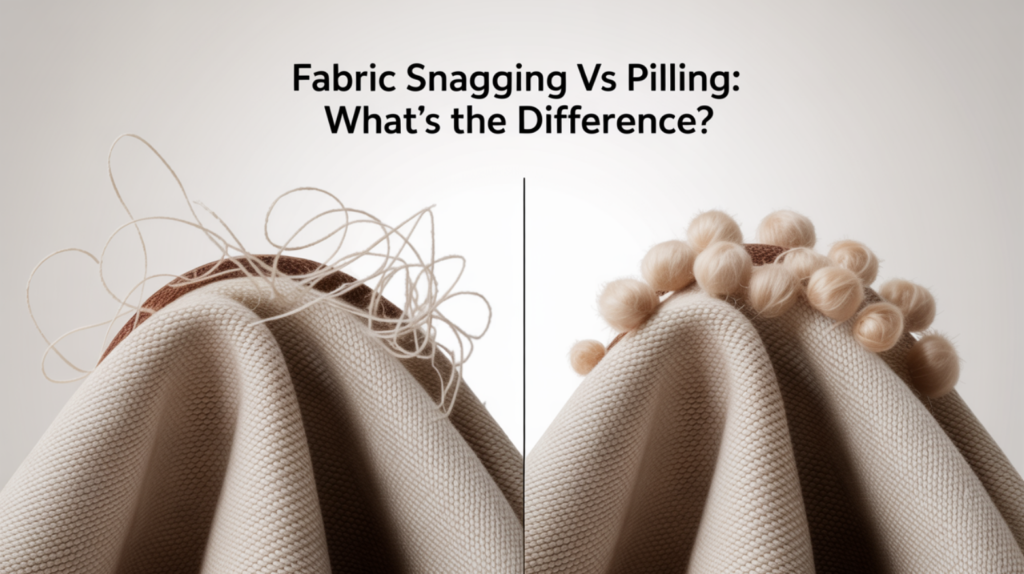
Fabric snagging happens when individual threads are pulled out of place, forming visible loops or raised strands on the surface. The fabric structure remains mostly intact, but the smooth appearance is disrupted.
Snagging is usually caused by:
- Sharp or rough contact
- Friction against hard surfaces
- Accessories like rings, zippers, or bags
A full explanation of this process is covered in what is fabric snagging?.
What Is Fabric Pilling?
Fabric pilling occurs when loose fibers break away from the yarn, tangle together, and form small balls (pills) on the surface of the fabric. These pills remain attached by tiny fiber strands.
Pilling is commonly caused by:
- Repeated rubbing
- Low-twist or short fibers
- Frequent washing and wearing
Unlike snagging, pilling does not involve pulled threads, it involves fiber breakage and entanglement.
Visual Differences Between Snagging and Pilling
Although both affect appearance, they are easy to tell apart once you know what to look for:
- Snagging:
- Long loops or pulls
- Threads look stretched
- Damage follows a specific direction
- Pilling:
- Small fuzzy balls
- Surface looks rough or bobbly
- Damage spreads evenly over areas of friction
Why the Difference Matters
Treating snagging like pilling can make things worse. For example:
- Shaving a snag can cut structural threads
- Pulling a pill rarely damages the fabric underneath
Knowing which issue you’re dealing with helps you decide whether repair is possible.
Which Fabrics Are More Prone to Each?
Some fabrics are more likely to snag, while others pill more easily:
- Snag-prone fabrics:
Knits, silk, chiffon, loose weaves, stretch fabrics - Pill-prone fabrics:
Wool blends, polyester blends, low-quality cotton
Fabric construction plays a major role, which is why some clothes experience both problems more frequently than others. This is discussed in why some clothes snag more than others.
Is One a Sign of Poor Quality?
Neither snagging nor pilling automatically means a garment is poorly made. Many high-quality fabrics snag or pill simply because of their fiber type and weave structure.
However, excessive surface damage shortly after purchase may raise questions about production standards.
Summary: Snagging vs Pilling
- Fabric snagging involves pulled threads
- Fabric pilling involves fiber balls
- They have different causes
- They require different care and repair methods
Correctly identifying the problem is the first step toward protecting your clothes and extending their lifespan.