
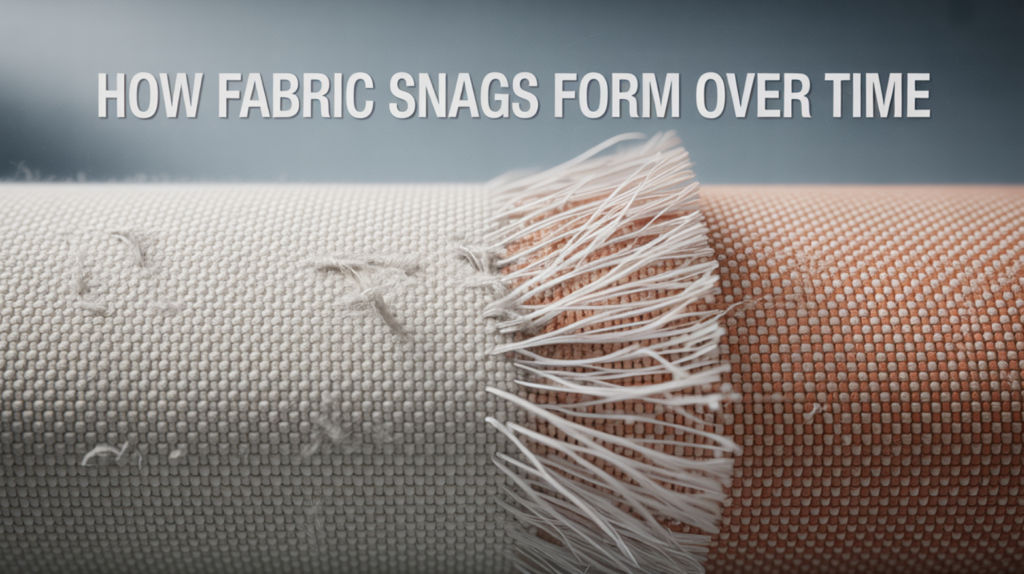
Fabric snags rarely appear all at once. In most cases, they develop gradually, caused by repeated stress on the fabric surface rather than a single sharp incident. Understanding how snags form over time helps explain why some clothes look fine at first but begin to show damage after weeks or months of wear.
The Early Stage: Micro Stress on Fabric Threads
Every fabric is made of interlocked yarns or fibers. During normal use, these threads experience:
- Light friction
- Stretching
- Minor surface contact
At this stage, the fabric still looks normal. However, repeated micro stress slowly loosens individual threads, especially in fabrics with open weaves or flexible knits. This basic structure is explained in what is fabric snagging.
Repeated Friction and Directional Pulling
Over time, friction becomes directional. This happens when:
- A bag strap rubs the same area
- Jewelry brushes against fabric repeatedly
- A seat edge contacts clothing in the same spot
Instead of fibers breaking, threads begin to migrate outward, forming tiny loops. This is the moment snagging starts to become visible.
This process is different from surface fiber breakdown, which leads to pilling rather than snagging.
Loop Expansion and Thread Displacement
Once a loop forms, it becomes easier for that thread to catch again. Each contact pulls it slightly further out, making the snag:
- More visible
- Longer
- Looser
At this point, the fabric is not torn, but its surface geometry is permanently altered unless repaired. Whether this damage can be reversed depends on fabric type and thread tension.
Fabric Structure Plays a Major Role
Some fabrics resist this process better than others. Snags form faster in:
- Loose knits
- Lightweight weaves
- Stretch fabrics
- Smooth filament fibers
In contrast, tightly woven or highly textured fabrics tend to hide or resist thread displacement. This explains why some clothes snag more than others, even under similar conditions.
Why Snags Often Appear in the Same Areas
Snags commonly show up in predictable spots, such as:
- Elbows
- Hips
- Underarms
- Lower hems
These areas experience consistent movement and friction, accelerating the snagging process. This pattern is normal wear behavior, not usually a manufacturing issue, unless snagging appears excessively early.
Time Makes Snags More Noticeable
As fabric ages:
- Yarn tension relaxes
- Fibers lose elasticity
- Surface resilience decreases
This makes older garments more vulnerable to snagging, even if they were durable when new. Snags that form later in a garment’s life are typically cumulative damage, not sudden failure.
Why Understanding the Timeline Matters
Knowing how fabric snags form over time helps you:
- Identify early warning signs
- Prevent repeated damage
- Decide when repair is worthwhile
- Adjust care habits before damage worsens
Snagging is often a slow process, but early attention can prevent small loops from turning into permanent surface flaws.