
Rough surfaces damage delicate fabrics by catching, scraping, or pulling loose fibers during contact. Even surfaces that appear smooth can have microscopic textures capable of grabbing yarn loops and creating snags.
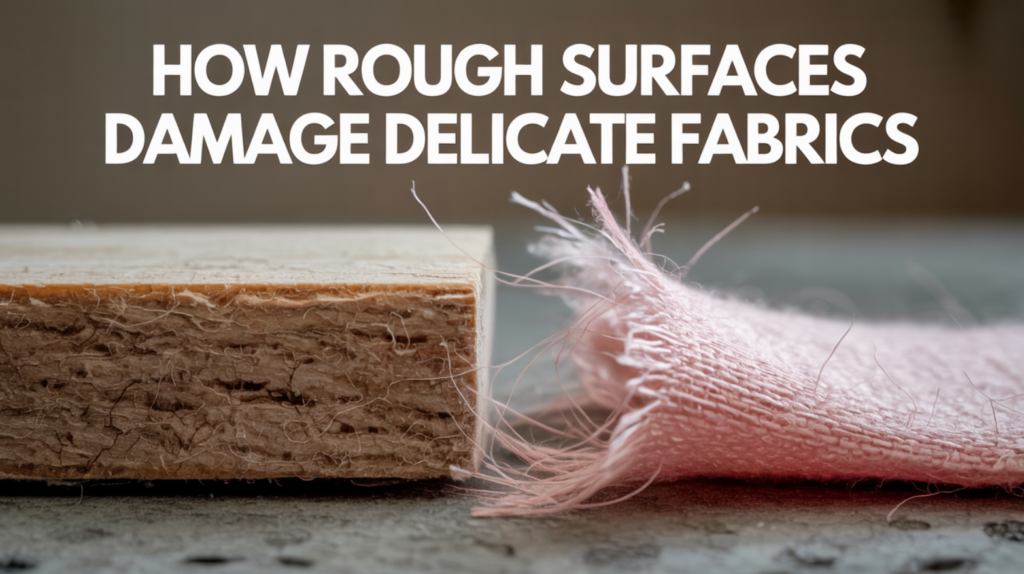
Most surface-related fabric damage happens gradually, not in a single incident.
What Counts as a Rough Surface?
Rough surfaces aren’t always obvious. Common examples include:
- Wooden furniture edges
- Concrete or stone walls
- Textured upholstery
- Car seats and armrests
- Desk corners and table edges
Repeated contact with these surfaces during daily wear slowly weakens fibers, especially in high-friction areas.
Why Delicate Fabrics Are Most Affected
Delicate fabrics have:
- Loose weaves
- Exposed loops
- Fine or smooth fibers
These characteristics make it easier for threads to catch, even on mildly textured surfaces. Fabrics like knits and lightweight synthetics are especially vulnerable, which is why jewelry and accessories often cause similar damage through repeated contact.
Micro-Abrasion: The Invisible Damage
Rough surfaces don’t always pull threads immediately. Instead, they cause micro-abrasion, where fibers are:
- Scuffed
- Frayed
- Lifted slightly
This weakens the fabric over time, making it far more likely to snag later, sometimes during washing, which is why people often wonder whether washing machines are to blame.
Repeated Contact Makes Damage Worse
The most severe snags usually appear where fabric touches the same surface repeatedly, such as:
- Chair arms
- Desk edges
- Seat backs
This repetitive stress mirrors what happens when cheap or lower-quality fabrics snag more easily, as weaker fibers can’t recover from ongoing abrasion.
Static Electricity Increases Surface Snagging
Static electricity can cause fibers to stand upright, making them more likely to catch on textured surfaces. This is especially common in dry environments and with synthetic fabrics.
This interaction is covered more deeply in how static electricity increases snagging risk.
Why Surface Damage Often Goes Unnoticed
Surface-related damage builds slowly and may not be visible right away. A garment may look fine until a single movement pulls a loosened fiber free, creating a sudden snag.
This delayed effect explains why snags often seem random or unavoidable, even though the underlying cause was repeated surface contact.
Understanding Surface Damage Helps Prevention
Recognizing how rough surfaces affect fabric helps you:
- Identify high-risk environments
- Predict where snags are likely to form
- Reduce repeated contact in vulnerable areas
Prevention strategies are covered elsewhere, but understanding causes is the first step.