
Knit fabrics snag differently from woven fabrics. Because they are made from connected loops, a single snag can shift the entire pattern. With the right technique, however, most knit snags can be fixed completely and the fabric can be restored to its original shape.
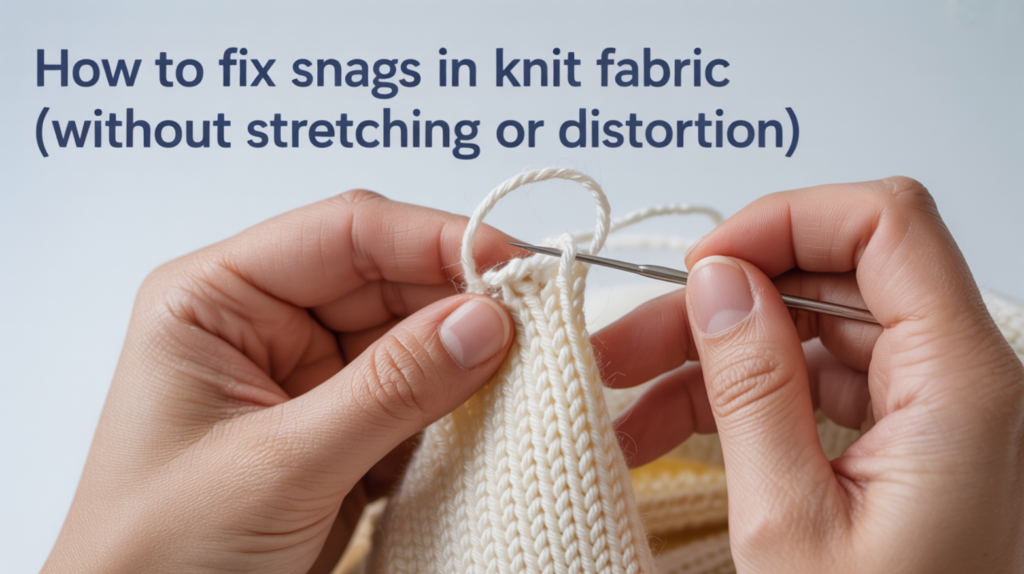
Why Knit Snags Spread More Easily
In knit fabric, each loop depends on the tension of the surrounding loops. When one loop is pulled, nearby loops shift, making the snag appear larger than it actually is. This is why knits require slower, more controlled repair.
The same principle is explained in how to fix snagged sweaters, since sweaters are a type of knit fabric.
Step-by-Step: How to Fix Snags in Knit Fabric
1. Place the Fabric Flat
Lay the knit garment on a smooth surface and gently smooth the area around the snag.
2. Insert a Fine Needle or Crochet Hook
Push the tool through the knit close to the base of the snag.
3. Pull the Snag Loop to the Inside
Hook the loop and gently pull it through to the reverse side of the fabric.
4. Rebalance the Knit Loops
Using your fingers, lightly massage and shift the surrounding loops until the surface looks even again.
This technique follows the same principle used in how to remove snags without cutting the thread and how to fix snagged fabric, but with extra care for loop tension.
5. Relax the Fibers
Light steam helps the loops settle back into place.
Handling Large or Repeated Knit Snags
If the snag returns after washing or wearing, gently adjust the neighboring loops again until the fabric stabilizes. Persistent problems may indicate loose knit tension that benefits from professional repair.
For overall care and prevention, follow the protection strategies in
how to fix fabric snagging