
Fabric snags often don’t start during wear, they usually begin inside the washing machine. Incorrect washing habits create friction, tension, and pulling forces that weaken fibers and turn tiny loops into visible snags.
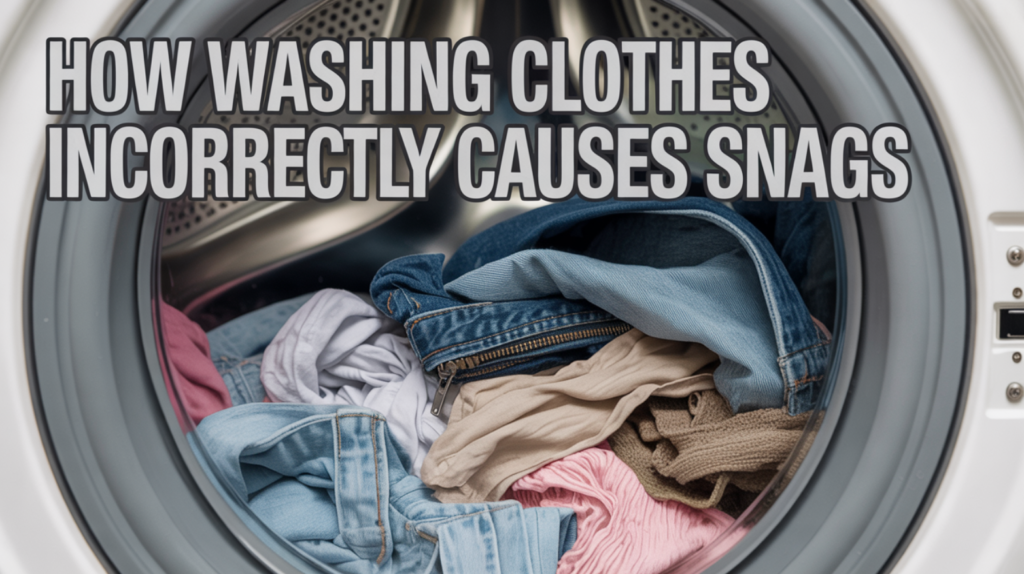
Below is a clear breakdown of why washing causes snags and what specifically goes wrong
How Washing Machines Create Snags
Washing machines clean clothes through mechanical agitation, not just water. That movement is helpful for dirt removal but harmful when fabrics aren’t protected.
Common snag-causing actions include:
- Clothes twisting tightly during spin cycles
- Fabrics rubbing against zippers, hooks, or buttons
- Delicate fibers catching on rough seams of heavier garments
- Excessive movement in large or overloaded loads
These forces stretch yarn loops until they pull out of the fabric surface.
Mixing Heavy and Delicate Clothes
One of the biggest mistakes is washing all clothes together.
Heavy items like jeans, hoodies, or towels act like abrasive surfaces. When delicate fabrics brush against them, the fibers catch and pull.
This is why lightweight garments benefit from being washed separately, a topic covered in detail in Should You Wash Delicate Fabrics Separately?.
Overloading the Washing Machine
An overloaded washer prevents clothes from moving freely. Instead of floating and rinsing, fabrics:
- Press tightly against each other
- Stretch unnaturally during spins
- Get pinned between heavier items
This constant pressure increases snagging, especially for knit and woven fabrics with loose yarn structures.
Using the Wrong Wash Cycle
Fast, aggressive cycles increase fabric stress.
High agitation cycles:
- Stretch fibers repeatedly
- Increase friction between garments
- Pull loose threads outward
Delicate and slow cycles reduce this stress and are essential for snag-prone materials.
Skipping Laundry Protection
Loose garments inside a washer are exposed to:
- Zippers
- Hooks
- Internal drum friction
- Sharp stitching edges
Using laundry bags creates a physical barrier that limits fiber pulling. We’ll cover which ones work best in Best Laundry Bags to Prevent Fabric Snagging.
Excessive Spinning and Drying Damage
Even if washing is gentle, drying can worsen the damage.
High-speed spin cycles stretch already weakened fibers, while dryers add heat and tumbling stress. This is why many snags appear after clothes are dry.
Does Fabric Softener Prevent Snags?
Fabric softeners reduce static and friction slightly, but they don’t stop mechanical pulling.
They may help reduce minor surface friction, but they cannot prevent snags caused by poor washing practices.
Why Washing Frequency Matters
Overwashing weakens fibers over time. Each wash slowly loosens yarn tension, making fabrics more vulnerable to snagging, especially delicate garments.
Choosing the right wash frequency is just as important as the method, which we’ll address in How Often Should Delicate Fabrics Be Washed?.
The Real Cause Behind Washing-Related Snags
Snags are rarely caused by water alone. They happen because of:
- Friction
- Tension
- Fiber overstretching
- Repeated mechanical stress
Correct washing habits significantly reduce these forces and extend fabric life.
Key Takeaway
Incorrect washing causes snags by pulling fibers beyond their natural structure. Gentle cycles, proper sorting, load control, and physical protection are the real solutions, not quick fixes after damage appears.