
Yes, delicate fabrics should almost always be washed separately. Mixing them with heavier garments is one of the fastest ways to cause fabric snags, stretching, and surface damage.
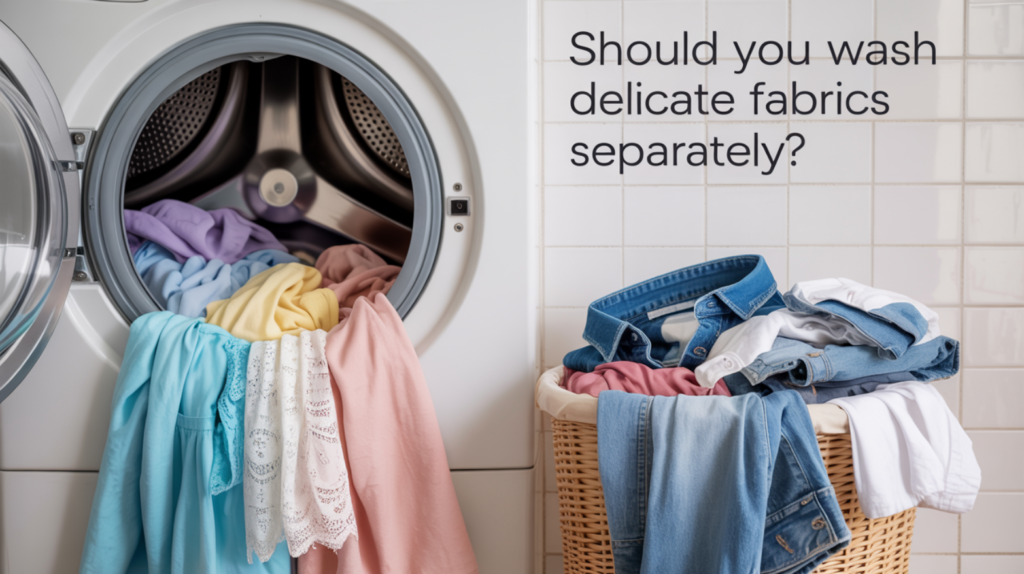
This isn’t about being overly cautious. It’s about controlling friction and tension, which are the real enemies of delicate fibers.
What Counts as a Delicate Fabric?
Delicate fabrics are materials with fine, loosely structured fibers that pull easily when stressed.
Common examples include:
- Knit tops and sweaters
- Chiffon, silk, satin
- Lace and mesh fabrics
- Lightweight synthetic blends
- Activewear with stretch fibers
These materials snag more easily because their yarn loops are exposed on the fabric surface.
Why Mixing Clothes Causes Snags
When delicate items are washed with heavier clothing, several things happen at once:
- Jeans, towels, and hoodies create abrasion
- Zippers, seams, and buttons act like hooks
- Delicate fibers stretch while heavier fabrics stay rigid
- Spin cycles twist fabrics together unevenly
This mechanical stress pulls threads out of place, leading to visible snags, a process explained earlier in How Washing Clothes Incorrectly Causes Snags.
The Hidden Damage of “Looks Fine” Washing
Sometimes fabrics don’t snag immediately. Instead, washing them incorrectly causes micro-damage:
- Fibers loosen internally
- Yarn tension weakens
- Surface loops become unstable
These weakened fibers then snag later during wear, drying, or even light contact with bags or jewelry.
This delayed damage is why people often blame wear, when the real cause was the wash.
Can Laundry Bags Replace Separate Washing?
Laundry bags help, but they don’t fully replace separation.
Laundry bags:
- Reduce direct contact
- Prevent zipper and hook damage
- Limit fabric stretching
However, bags still move inside the same wash environment. For best results, combine both methods, which we’ll break down in Best Laundry Bags to Prevent Fabric Snagging.
What Happens If You Don’t Separate Delicate Fabrics?
Consistently washing delicate fabrics with regular clothes leads to:
- Faster fabric aging
- Increased snag frequency
- Loss of shape and elasticity
- Reduced garment lifespan
Once fibers are pulled, they cannot return to their original structure, even if repaired.
Wash Cycles Matter Too
Even when washing delicates alone, using the wrong cycle still causes damage.
High-agitation cycles:
- Stretch fibers aggressively
- Increase snag risk
- Worsen existing weak points
Gentle or delicate cycles reduce agitation and pair well with fabric separation.
Drying Can Undo Proper Washing
Even if washing is done correctly, drying can reverse the benefits.
Heat and tumbling stress already-loosened fibers, which is why snags sometimes appear after drying.
Does Fabric Softener Make Separation Unnecessary?
No. Fabric softeners reduce static, not mechanical pulling.
They don’t stop:
- Twisting
- Stretching
- Yarn pulling
How Often You Wash Matters
Even when separated, washing delicates too frequently weakens fibers over time.
Reducing wash frequency helps preserve yarn strength.
Final Answer
Washing delicate fabrics separately isn’t optional care, it’s basic fabric protection. Separation minimizes friction, prevents yarn pulling, and dramatically reduces snag formation.