
Fabric damage rarely comes from one direction. Some wear appears suddenly, when threads are pulled out of place. Other damage develops slowly, as constant rubbing thins the surface over time.
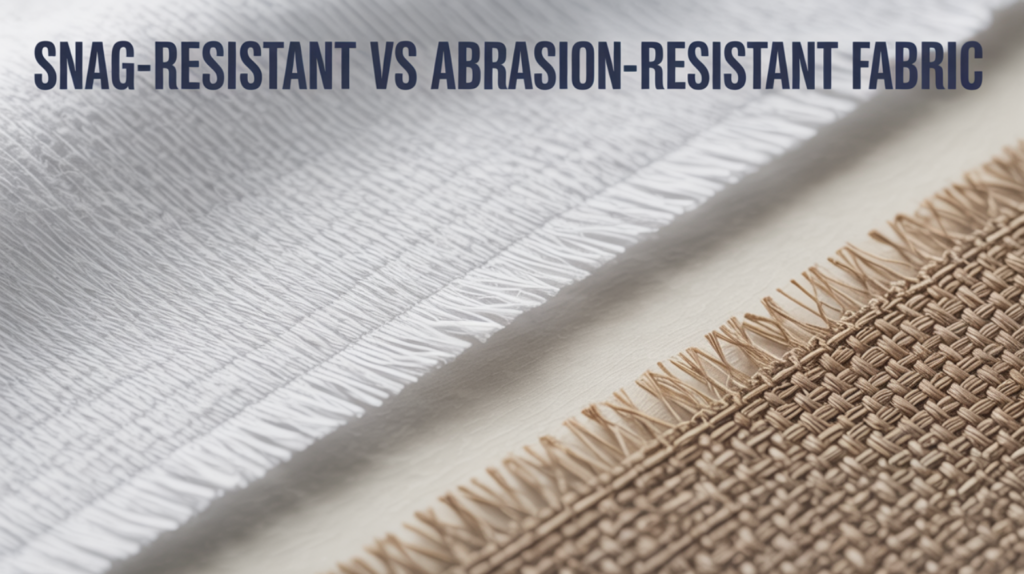
These two processes feel similar to the eye, yet they come from completely different weaknesses. That is why snag resistance and abrasion resistance are not interchangeable qualities.
What Snag Resistance Handles
Snag resistance controls what happens when a fabric encounters hooks, edges, jewelry, or textured surfaces. In these moments, the surface threads experience short bursts of stress. When the construction is stable, those threads remain anchored and settle back into position. When the structure is loose, they rise, form loops, and create visible pulls.
Once a snag appears, the surrounding fibers lose support, making that section of the fabric more vulnerable to future damage.
What Abrasion Resistance Controls
Abrasion resistance governs long-term wear from repeated rubbing. Movement against seats, bags, walls, and even other clothing gradually removes material from the surface. Strong abrasion resistance allows a fabric to withstand this slow grinding without thinning, fading, or breaking apart.
This kind of damage is quiet and accumulates over months or years, rather than appearing in a single moment.
Why These Two Protections Behave Differently
The structures that limit sudden thread displacement are not the same ones that endure constant friction. A surface optimized for snag resistance may still wear down under persistent rubbing, while an abrasion-resistant surface may leave individual threads exposed and vulnerable to catching.
The contrast becomes especially visible when examining materials that easily develop pulled threads, many of which can still endure heavy abrasion without tearing.
This difference is easier to recognize when viewed alongside how pilling resistance compares to snag resistance, since both protect surface appearance but fail under different forms of stress.
How Daily Life Reveals the Difference
Most people experience both forms of wear without realizing they come from different sources. Sleeves brushing across desks, bags rubbing against coats, and upholstery supporting constant movement all contribute to abrasion. Meanwhile, a watch clasp catching on a sweater or a rough surface brushing past clothing produces instant snags.
Recognizing this pattern helps explain why some garments lose their smooth look even though the fabric remains thick and intact. That behavior becomes clearer when understanding how snag resistance protects surface threads.
Choosing Fabrics with the Right Balance
Active environments with heavy movement require abrasion resistance. Settings filled with edges, accessories, and textured surfaces demand snag resistance. Many quality fabrics attempt to balance both, but understanding which form of stress dominates your daily routine leads to better long-term results.
Closing Reflection
Snag resistance guards against sudden damage. Abrasion resistance defends against slow erosion. Each protects a different chapter in the life of a fabric. When you choose with that distinction in mind, your clothing and furnishings remain calm, stable, and visually intact far longer.