
Fabric snagging in daily wear happens when loose fibers or yarn loops catch on sharp, rough, or abrasive elements during normal movement. This damage is usually gradual and often unavoidable over time, especially with delicate or loosely woven fabrics.
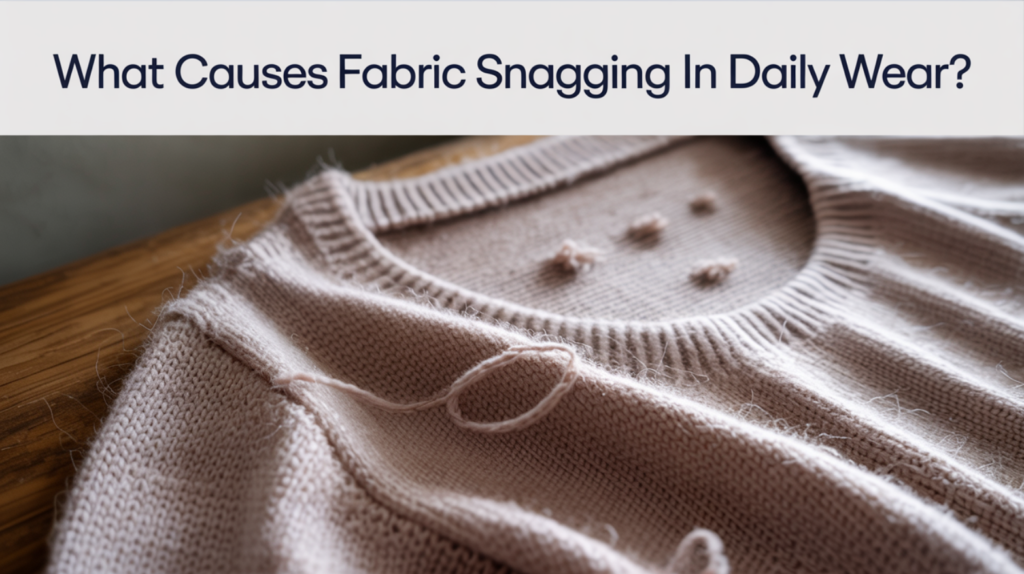
In short: everyday activities expose clothing to friction, pressure, and contact points that pull fibers out of place.
1. Constant Friction From Movement
Everyday actions like walking, sitting, bending, or reaching create repeated friction in the same areas.
Common friction zones include:
- Elbows and forearms
- Waistbands and hips
- Underarms
- Inner thighs
Over time, this friction loosens fibers, making them easier to catch and form snags. This is why high-movement clothing like sweaters and activewear often show damage first.
You can see how surface contact worsens this problem in our related guide on rough surfaces damaging delicate fabrics.
2. Contact With Everyday Objects
Daily wear exposes clothing to countless snag-causing items, including:
- Chair edges
- Seat belts
- Desk corners
- Door handles
- Bags and backpacks
Even smooth-looking objects can have microscopic rough spots that catch threads. This becomes worse when combined with motion, such as standing up or twisting.
Accessories deserve special attention here, our article on jewelry and accessories snagging clothes explains why rings, bracelets, and zippers are common culprits.
3. Fabric Construction and Weave Type
Some fabrics snag more easily because of how they’re made.
Snag-prone constructions include:
- Loose knits
- Open weaves
- Lightweight synthetics
- Long-fiber yarns
These fabrics have more exposed loops, which means fewer pulls are needed to cause visible damage. Tightly woven fabrics generally resist snagging better under daily wear.
If you’ve noticed budget clothing snags faster, this connects closely with whether cheap fabrics snag more easily due to lower fiber quality and weaker weaving.
4. Daily Washing and Wear Cycle
Fabric doesn’t only suffer while being worn. Each wear-wash cycle:
- Weakens fibers slightly
- Increases surface fuzz
- Loosens yarn structure
Over time, this makes clothing more vulnerable to snagging even during normal use. Washing machines, in particular, can accelerate this process — a topic covered in detail in do washing machines cause fabric snagging?
5. Static Electricity and Fabric Tension
Static electricity causes fibers to stand up and separate, especially in dry conditions. Raised fibers are more likely to catch on nearby objects, increasing snag risk during movement.
This effect is more common with synthetic fabrics and in low-humidity environments. We explore this in depth in can static electricity increase snagging?
6. Repeated Stress on the Same Areas
Daily wear often stresses the same spots repeatedly:
- Leaning on desks
- Carrying bags on one shoulder
- Sitting on rough seating
These repeated stress points weaken fabric structure locally, making snags appear suddenly even if the garment looks fine elsewhere.
Why Daily Snagging Is So Common
Fabric snagging during daily wear isn’t always a sign of poor quality. It’s usually the result of:
- Normal friction
- Repeated movement
- Environmental contact
- Gradual fiber weakening
Understanding these triggers helps you predict where snags will appear and take steps to reduce them.