
Fabric snagging is a type of surface damage that happens when threads in a fabric are pulled out of place, forming visible loops, pulls, or raised strands on the surface of clothing or textiles. Unlike holes or tears, snagging usually affects the appearance and texture of the fabric rather than breaking it completely.
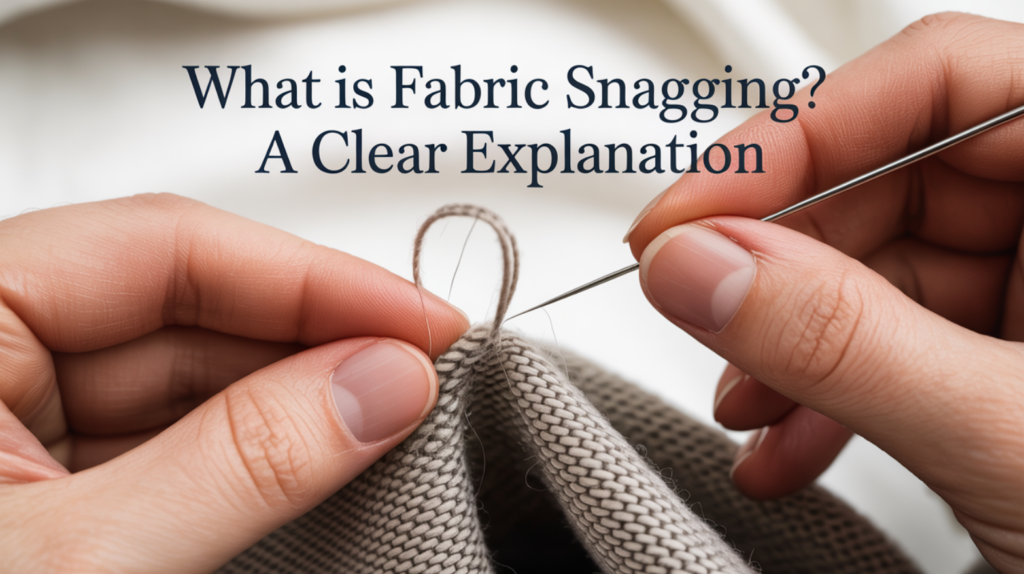
In simple terms, fabric snagging occurs when something catches on the fabric and drags individual yarns outward, disrupting the smooth structure of the material.
How Fabric Snagging Happens
Fabric snagging happens when external friction or sharp contact interferes with the fabric’s weave or knit. This often occurs during normal daily use, not because the fabric is defective, but because certain materials are more vulnerable to surface pulls.
Common situations that cause snagging include:
- Contact with rough surfaces
- Jewelry, zippers, or accessories brushing against fabric
- Improper washing or drying
- Repeated friction in the same area
Over time, these small pulls can become more noticeable as the fabric structure weakens. This gradual process is explained in more detail in how fabric snags form over time.
Fabric Snagging vs Other Fabric Damage
Fabric snagging is often confused with similar fabric problems, especially pilling. While both affect the surface, they are not the same issue.
- Snagging involves pulled threads
- Pilling involves fiber balls forming on the surface
Is Fabric Snagging Permanent?
Many people assume that once a fabric snags, the damage cannot be fixed. In reality, some snags are repairable, especially when the thread is still intact and hasn’t broken.
Whether a snag can be repaired depends on:
- Fabric type
- Thread tension
- Snag size
- How quickly it is addressed
Why Fabric Snagging Is So Common
Fabric snagging is common because modern fabrics prioritize softness, stretch, and lightweight comfort, which often makes them more prone to surface damage. Materials with looser weaves or delicate fibers are especially susceptible.
Some clothes snag more frequently than others due to fabric construction, yarn quality, and usage patterns. You can explore these reasons further in why some clothes snag more than others.
Is Fabric Snagging a Defect?
Not all fabric snags indicate poor quality or manufacturing issues. In many cases, snagging is considered normal wear and tear, especially for delicate or textured fabrics.
However, there are situations where repeated snagging may point to a flaw in fabric construction or finishing.
Why Understanding Fabric Snagging Matters
Understanding what fabric snagging is helps you:
- Choose fabrics more wisely
- Care for clothes properly
- Prevent unnecessary damage
- Decide when repair is possible
Fabric snagging is not always avoidable, but with the right knowledge, it can often be minimized, repaired, or prevented altogether.