
Not all clothes snag at the same rate, even when worn and washed under similar conditions. This difference comes down to fabric structure, fiber type, and how the garment is used, rather than price alone.
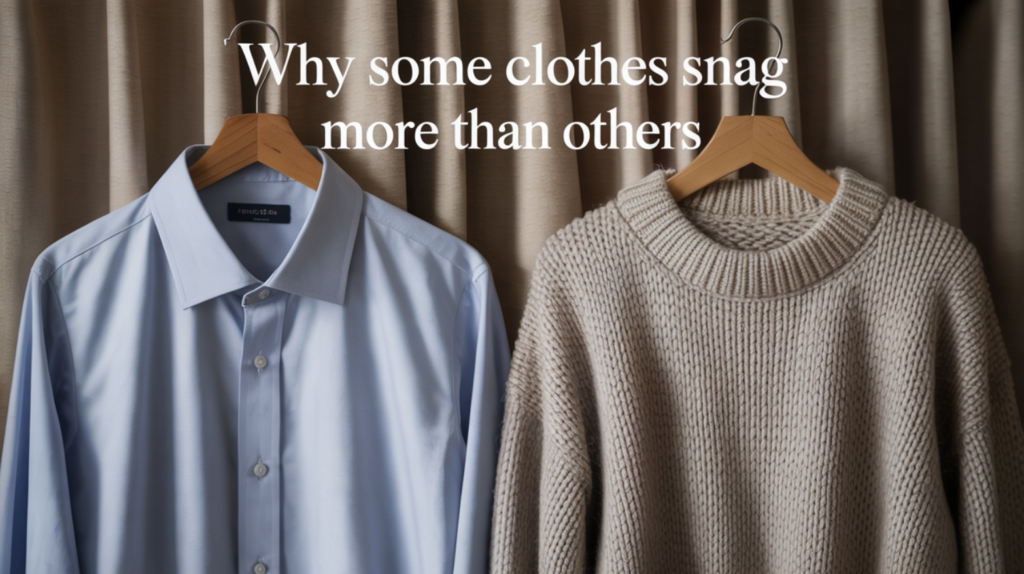
Understanding why some clothes snag more than others helps explain why certain items seem fragile while others stay smooth for years.
Fabric Structure Is the Biggest Factor
The way a fabric is constructed plays a major role in how easily threads can be pulled out of place.
Clothes are more likely to snag if they have:
- Loose weaves or open knits
- Smooth, continuous filament fibers
- Stretchy or flexible constructions
In these fabrics, threads can move more freely, making them easier to displace when rubbed or caught. This movement is the foundation of fabric snagging.
Fiber Type Influences Snagging Risk
Different fibers behave differently under friction:
- More prone to snagging:
Silk, rayon, nylon, polyester filaments - More resistant to snagging:
Tightly spun cotton, textured wool, dense blends
Smooth fibers slide easily when pulled, while textured or fuzzy fibers tend to grip each other, reducing thread movement. This is one reason some garments snag instead of pilling, a distinction covered in fabric snagging vs pilling.
Garment Design and Fit Matter
Snagging often appears in specific areas because of how clothes are designed and worn. Common high-risk zones include:
- Elbows and forearms
- Waist and hip areas
- Underarms
- Lower hems
These areas experience repeated friction and directional stress, causing snags to form gradually over time.
Care and Washing Habits Play a Role
Even durable fabrics can snag if care habits increase surface stress. Snagging becomes more likely when:
- Delicate clothes are washed with heavy items
- Zippers and hooks are left open
- Fabrics are over-dried or tangled
Over time, this repeated stress weakens the surface and makes snags more likely, which can also affect whether damage is repairable.
Price Does Not Guarantee Snag Resistance
Expensive clothes can snag just as easily as cheaper ones. Higher price often reflects:
- Fabric softness
- Drape
- Comfort
- Design complexity
These qualities sometimes increase snag risk rather than reduce it. Frequent snagging does not automatically mean poor quality or defects, unless it happens unusually quickly.
Why This Understanding Matters
Knowing why some clothes snag more than others helps you:
- Choose fabrics more wisely
- Adjust care routines
- Set realistic expectations
- Prevent repeat damage in vulnerable garments
Snagging is not random, it follows clear patterns once you understand how fabrics behave.