
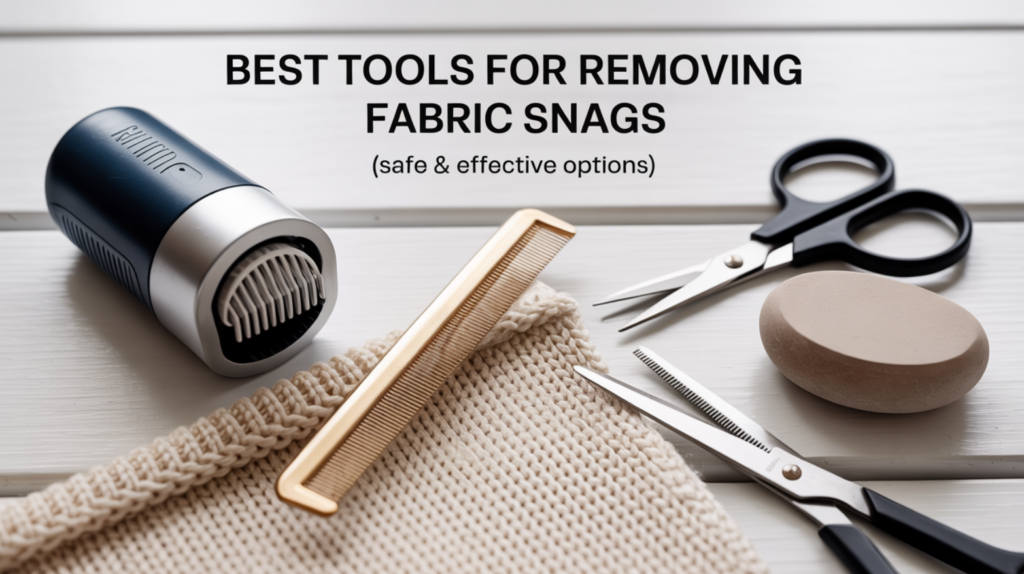
Using the right tool can make fabric snag repair faster, cleaner, and far less stressful. While many snags can be fixed with a simple needle, certain fabrics and stubborn pulls benefit from specialized tools designed to guide fibers back into place without damaging the material.
Why Tools Matter in Snag Repair
Snags happen because fibers are displaced, not because the fabric is broken. The best tools work by pulling the fiber back into the weave instead of cutting or shaving it.
This same principle is explained in how to remove snags without cutting the thread and how to fix snagged fabric.
Most Effective Tools for Removing Fabric Snags
Snag Repair Tool
A thin, textured metal tool designed to catch loose fibers and pull them to the back of the fabric. This is one of the safest tools for both woven and knit materials.
Fine Sewing Needle or Pin
Perfect for small snags on delicate fabrics and everyday clothing. This is the method used in how to repair snags in clothing.
Crochet Hook
Ideal for thicker knits and sweaters where loops need to be repositioned gently. Pair this with the technique in how to fix snagged sweaters.
Soft Cloth & Steam
Used after repair to relax fibers and smooth the surface.
Tools You Should Avoid
Avoid razors, scissors, and sharp blades. Cutting a snag weakens the fabric and can create permanent damage.
For fuzzy finishes after repair, controlled use of fabric shavers is discussed in best fabric shavers for snagged clothes.
Choosing the Right Tool for Your Fabric
- Delicate fabrics: needle or snag tool
- Sweaters & knits: crochet hook or snag tool
- Thick weaves: snag tool first, needle for detail
For knit-specific handling, also see how to fix snags in knit fabric.
Preventing New Snags After Repair
Once repaired, protect the garment using the care guidelines in
how to fix fabric snagging