
A pulled thread in clothing is often fixable because the fabric itself has not necessarily torn. In many cases, one yarn has simply been dragged out of position, which creates a loop, a line, or a puckered patch that makes the garment look damaged. That is why the best repair is usually gentle tension control rather than cutting, trimming, or yanking at the thread. If you already understand the basics of how to fix fabric snagging, this repair will feel familiar, but the details still matter because different garments react differently once a thread has shifted.
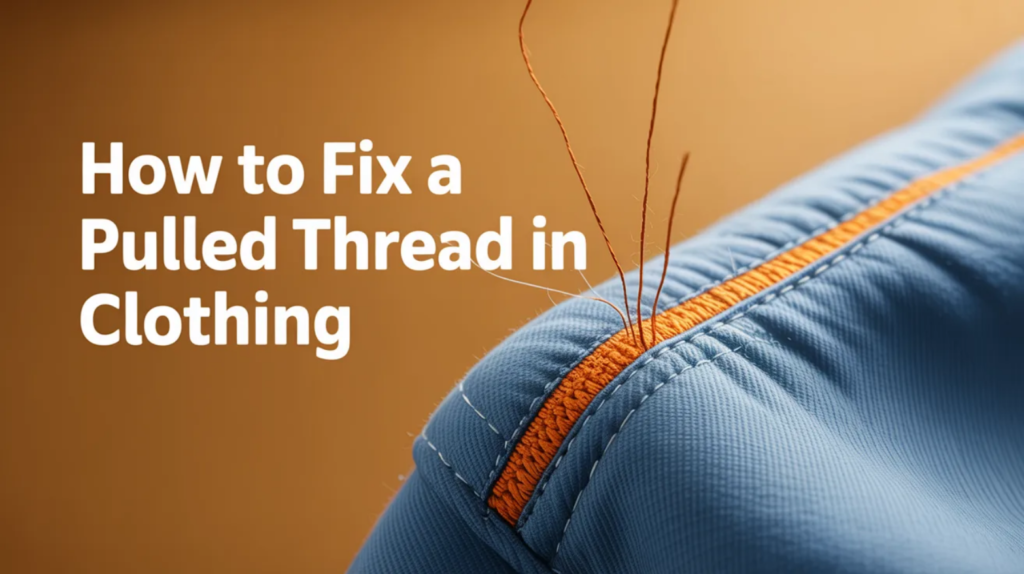
The first useful thing to know is that a pulled thread is not always the same as a broken thread. If the yarn is still intact, you usually have a much better chance of improving the fabric surface without leaving a permanent weak spot.
What a pulled thread actually means
When clothing catches on a nail, ring, zip, rough bag edge, chair corner, or even a dry patch of skin, one thread can be dragged forward or sideways. That single movement changes the tension across the surrounding weave or knit. The result may look dramatic, but the garment is often suffering from misalignment more than true structural damage.
That is why a pulled thread can show up in different ways:
- a small loop sticking out from the surface
- a faint line running across the fabric
- puckering gathered around one point
- a section that suddenly looks rippled or uneven
Once you see it that way, the repair becomes more logical. You are not trying to “hide” the problem. You are trying to return tension to the fabric more evenly.
Before you touch the thread
Pause for a moment and inspect the area closely. If the thread is intact, work slowly. If the thread is broken, the fabric has opened into a hole, or the snag has run through a seam or decorative detail, home repair may only partly improve it.
It also helps to think about the fabric type. A pulled thread in a knit top will behave differently from one in a smooth blouse, a stretchy dress, or a woven shirt. Some fabrics bounce back well. Others keep a faint memory of the pull even after a careful repair. That does not mean the repair failed. It just means different materials reveal damage differently.
A simple repair method that works on many garments
Start by placing the garment on a flat surface. Do not hold it up in the air and do not stretch it across your lap. A flat surface gives you a truer view of how the fabric is sitting.
Next, smooth the area lightly with your fingertips. Do not rub hard. The aim is simply to see where the tension has gathered. In some garments, especially lightweight woven items, the pulled thread creates a visible tight point with slight rippling around it.
Now work the surrounding fabric before you touch the loop itself. Use small side-to-side movements, then tiny motions up and down. You are encouraging the tension to spread back through the fabric instead of remaining trapped in one spot. This part is slow, but it is often the step that makes the biggest difference.
If the thread is still raised, use a very fine blunt tool to guide it inward. A smooth needle or similar tool can help you nudge the loop back without piercing the cloth. The key word is nudge. Pulling too hard can turn a small cosmetic problem into a longer visible line.
After each adjustment, stop and look again. Many repairs improve a little at a time. People often make the problem worse because they keep working after the fabric has already improved enough.
Why cutting is usually the wrong move
A pulled thread often tempts people to trim it because it looks untidy and easy to remove. But that visible loop may still be part of the structure holding the fabric together evenly. Once you cut it, you cannot restore that exact thread path. On some garments, the area may fray, weaken, or stay permanently noticeable afterwards.
If you are unsure whether trimming is ever safe, it is better to read whether you can cut a snagged thread before doing something irreversible. In most cases, repair first and cut only with real caution, not as a first reaction.
When a pulled thread is easier to fix
Some garments respond especially well when the thread is still fresh and has not been repeatedly tugged. Textured fabrics, darker colours, and prints can also disguise minor remaining disturbance better than smooth, pale fabrics do. If the damage happened recently and the thread is still intact, the odds of improvement are usually better.
Thicker knits sometimes forgive a small pull surprisingly well because the structure has more give. Fine woven fabrics may need more patience, but even then, a careful repair can make the line or loop much less noticeable.
When you should stop and reassess
Home repair has limits. It is smarter to stop if the fabric begins to distort more with handling, if the thread seems broken rather than displaced, or if the garment is expensive enough that experimentation feels risky. Formal clothing, silk blends, delicate occasionwear, and sentimental items often deserve extra caution.
You should also stop if the snag runs through embroidery, lace, sequins, or a sharply visible front panel. In those cases, a professional may be able to minimise the damage more neatly than repeated home attempts.
Common mistakes that make a pulled thread worse
Most failed repairs come from speed, not from lack of tools. The biggest mistakes are:
- pulling the loop directly
- stretching the garment to force it flat
- cutting first and thinking later
- using sharp tools roughly
- continuing to work the area after it has already improved
A careful repair often looks almost unimpressive while you are doing it. That is usually a good sign. The more dramatic the movement, the more likely it is to create a second problem.
Can the fabric look normal again?
Sometimes yes. Sometimes almost. The answer depends on the weave, the colour, the fabric finish, and how badly the thread was pulled. On some garments, the repair blends in so well that you have to know where to look. On others, a faint mark remains at close range even though the clothing looks fine when worn normally.
That still counts as success if the thread is no longer sticking out and the damage is not spreading. A realistic repair does not always mean a perfect one.
Final thoughts
To fix a pulled thread in clothing, treat it as a tension problem before you treat it as a cutting problem. Keep the garment flat, work the surrounding fabric gently, and guide the thread rather than forcing it. In many cases, that calm approach is enough to make the damage far less visible and keep the garment wearable without turning a small pull into a permanent flaw.